
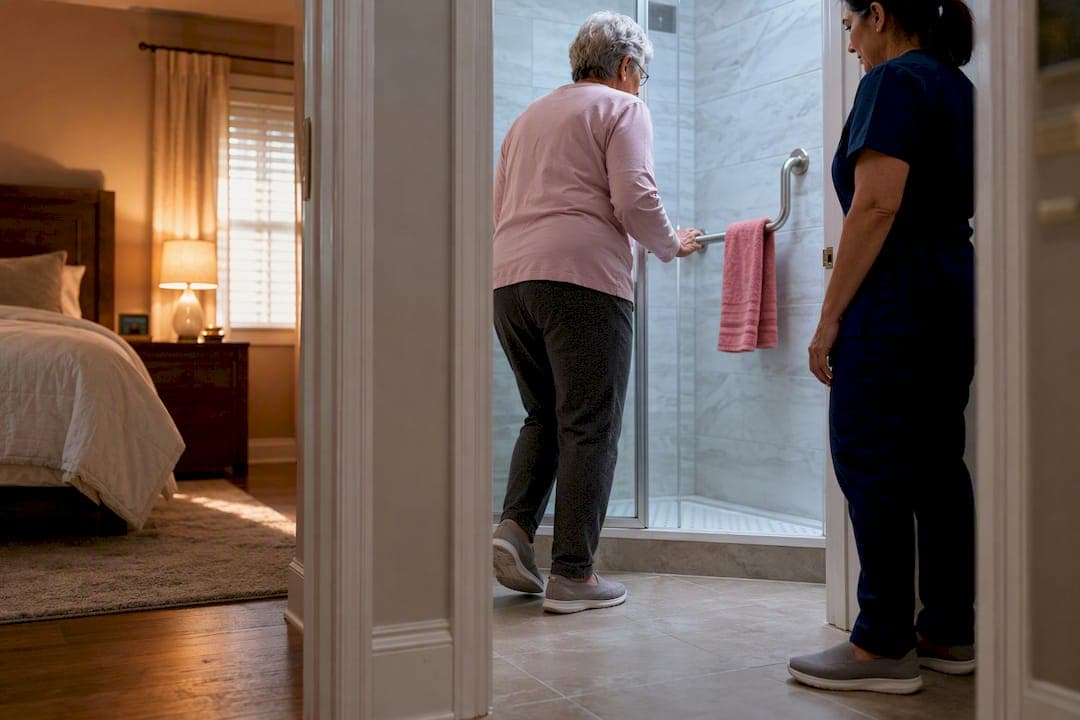
A senior home safety assessment identifies fall hazards room by room and ranks the fixes by urgency, so families know exactly what to address first. Act now if a parent has fallen recently, come home from the hospital, started using a cane or walker, or shown new confusion. Falls send about 3 million older adults to the emergency room every year, and waiting for a "someday" checklist often means waiting too long.
TL;DR:
- A professional assessment typically costs a few hundred dollars, with Medicare coverage possible for post-hospital evaluations.
- Most hazards like loose rugs, poor lighting, and clutter can be fixed quickly by families without professional help.
- Urgent modifications such as grab bars, lighting, and trip hazards should be addressed within the first week after assessment.
- A DIY walkthrough can identify obvious risks but requires professional evaluation if mobility or cognitive issues are detected.
- Follow-up assessments or phased renovations by certified specialists help maintain safety as health conditions change.
Table of Contents
- What Does a Senior Home Safety Assessment Cover?
- Why Do Home Safety Assessments for Seniors Matter?
- Who Performs a Home Safety Inspection for Seniors, and When?
- Room-by-Room Checklist for a Senior Home Safety Assessment
- What Hazards Get Missed, and How Do You Fix Them Fast?
- How Do You Get an Assessment, and What Does It Cost?
- Can You Do a DIY Home Safety Check First?
- What Happens After the Assessment?
- Why This Assessment Is About More Than the Checklist
- Get a Free In-Home Assessment Through Carexroads
- Sources
What Does a Senior Home Safety Assessment Cover?
A home safety evaluation for elderly residents looks past the obvious. Yes, someone checks for loose rugs and dim hallways. But a thorough assessment also watches how your parent actually moves through their day: getting out of bed, reaching the top shelf, navigating the shower, managing medications on a counter that's slightly too high.
Evaluators typically include occupational therapists, home health clinicians, or contractors certified as Aging-in-Place Specialists. Most visits run one to two hours, covering every room your parent uses regularly, plus the entry and exterior. Afterward, you receive a written report: a prioritized list of fixes, from "fix this week" to "plan for next year," rather than a vague warning to "be careful."
Why Do Home Safety Assessments for Seniors Matter?
The numbers explain the urgency better than any warning ever could. Falls are the leading cause of injury-related death for adults 65 and older, and the CDC recorded over 34,000 fall-related deaths among this group in 2019 alone. The Consumer Product Safety Commission adds another layer to that picture: falls and home-product hazards drive a large share of the roughly 1.4 million ER visits older adults make each year for product-related injuries, according to its home safety checklist for older consumers.
By the Numbers: Roughly 3 million ER visits and 34,000-plus deaths in a single year, all tied to falls among older adults. Most of those incidents trace back to a handful of preventable spots: bathrooms, stairs, and poorly lit hallways.
Small, inexpensive fixes in those high-traffic areas prevent a disproportionate share of serious injuries.
Who Performs a Home Safety Inspection for Seniors, and When?
Occupational therapists are considered the gold standard for a fall prevention assessment because they evaluate function, not just floor plans. They watch how your parent transfers from bed to chair, whether their reaction time has slowed, and whether a cognitive change has made stairs riskier than they look. Home health nurses and CAPS-certified contractors can also perform useful evaluations, particularly when the focus leans toward physical modifications.
Certain moments call for a professional visit rather than a DIY checklist: a recent fall, a new walker or cane, a hospital discharge, or any noticeable change in memory or judgment. Your local Area Agency on Aging, the National Council on Aging, or a hospital discharge planner can point you toward a qualified evaluator.
Room-by-Room Checklist for a Senior Home Safety Assessment
This senior home safety checklist mirrors what a professional evaluator looks for, organized by the areas where risk concentrates.
Exterior and entry
- Steps have secure handrails on both sides, not just one.
- Ramps and thresholds are free of gaps, ice, or uneven transitions.
- Outdoor lighting covers the walkway, not just the porch light.
Living areas and kitchen
- Walking paths stay clear of furniture, cords, and pet bowls.
- Rugs are removed or secured with non-slip backing.
- Frequently used items sit within easy reach, no step stools required.
- Flooring is slip-resistant, especially near sinks and entry points.
Bedroom and nighttime routine
- A lamp or nightlight sits within arm's reach of the bed.
- The path from bed to bathroom stays clear and well lit.
- A phone, medical alert device, or intercom is within reach overnight.
Bathroom
- Grab bars are installed near the toilet and inside the shower.
- Non-slip mats or strips cover the tub and shower floor.
- Water heater is set to 120°F or lower to prevent scald injuries.
Stairs and hallways
- Handrails run the full length of the staircase on both sides.
- Step edges are visible, with contrasting tape or lighting if needed.
- Light switches sit at both the top and bottom of every staircase.
Fire and electrical safety
- Smoke and carbon monoxide alarms are tested and within their expiration window.
- GFCI outlets protect kitchens and bathrooms.
- A simple, practiced escape plan accounts for reduced mobility.
What Hazards Get Missed, and How Do You Fix Them Fast?
The same handful of hazards show up in nearly every assessment: throw rugs, cluttered hallways, dim lighting, missing grab bars, and cords stretched across walking paths. None of these require a contractor.
- Remove or tape down loose rugs immediately.
- Add plug-in nightlights along the bedroom-to-bathroom path.
- Install grab bars near the toilet and shower before the next visit.
- Reroute or bundle cords away from foot traffic.
Pro Tip: Familiarity makes hazards invisible. A daughter who has walked past the same wobbly step for twenty years stops seeing it as a hazard. Bringing in an outside evaluator, even a neighbor with fresh eyes, catches what family members walk right past.
How Do You Get an Assessment, and What Does It Cost?
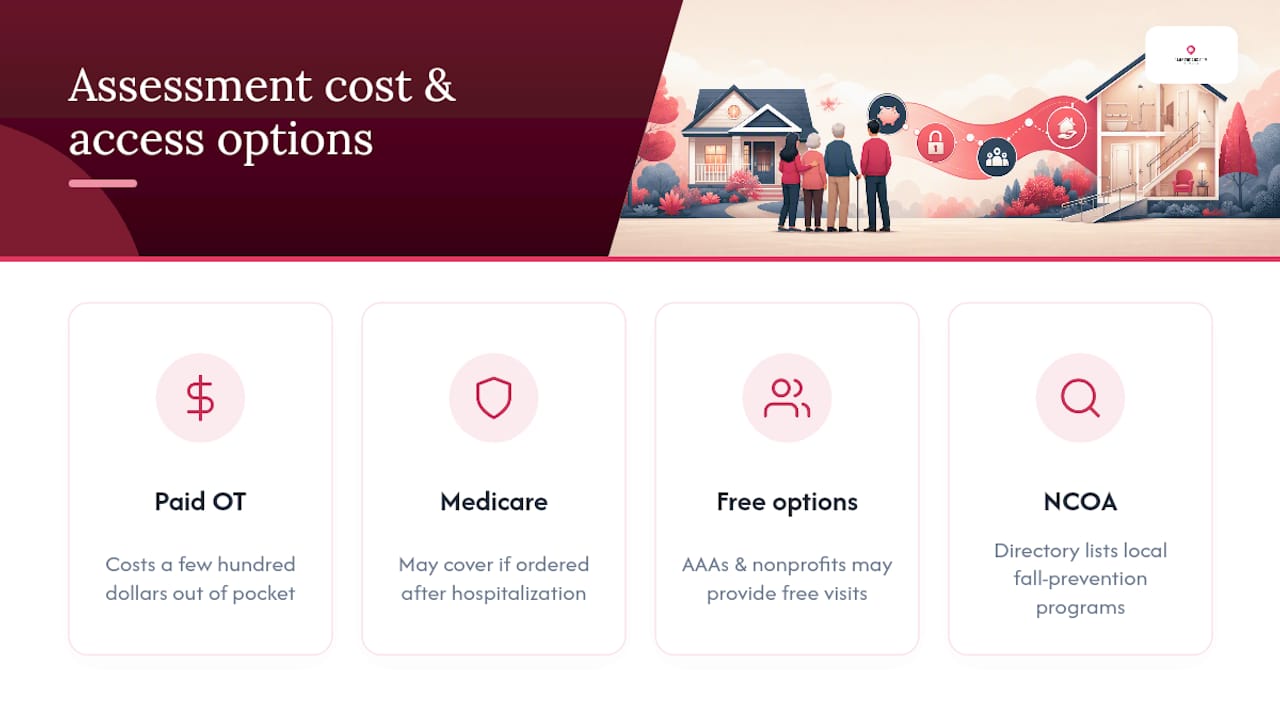
A professional occupational therapy evaluation typically costs a few hundred dollars out of pocket, with the exact price shifting based on your region, the evaluator's credentials, and whether the visit includes a written modification plan. Medicare Part B may cover a home safety evaluation when it's ordered as part of post-hospitalization care, so it's worth asking your discharge planner whether your parent's situation qualifies before assuming the full cost falls on your family.
Free or subsidized options exist, too. Many Area Agencies on Aging and nonprofit partners mail self-assessment booklets or send trained volunteers to do in-home visits at no charge. The National Council on Aging maintains a directory of local fall-prevention programs, a good starting point if cost is the barrier keeping you from scheduling one.
Can You Do a DIY Home Safety Check First?
A 15 to 30 minute walkthrough won't replace a clinical evaluation, but it catches the obvious problems fast and helps you decide how urgently you need a professional.
- Walk every path your parent uses daily and note anything underfoot.
- Check lighting in hallways, stairwells, and the bedroom-to-bathroom route.
- Inspect the bathroom for grab bars, slip resistance, and water temperature.
- Test stair handrails and step visibility in both directions.
- Confirm a phone or medical alert device is reachable from the bed and bathroom.
- Review medication storage and organization for mix-up risk.
Mark anything you'd worry about a toddler encountering as urgent. If you find a mobility issue you can't explain, like sudden trouble with stairs or a new fear of the shower, stop the DIY process and call a professional. That's a functional change, not a fixture problem, and it needs a clinician's eye.
What Happens After the Assessment?
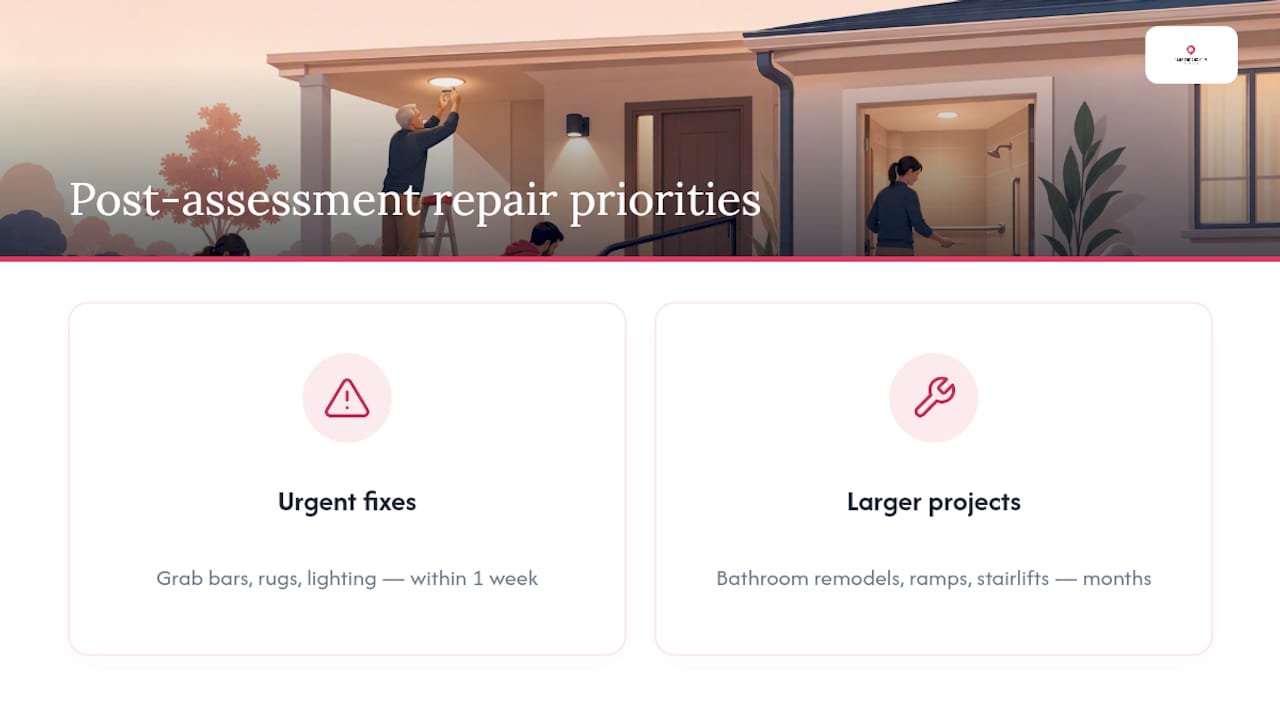
Your written report typically separates fixes into two buckets: urgent items to handle within a week, and larger projects to plan over the coming months. Grab bars, rugs, and lighting usually fall into the first group. Bathroom remodels, ramp construction, or stairlift installation belong in the second.
For any project involving construction, look specifically for a contractor with the Certified Aging-in-Place Specialist credential, and ask for references from similar jobs. Once the priority fixes are done, schedule a follow-up visit, particularly after any new fall, hospitalization, or mobility change, since risk factors shift as health status changes—this is a key principle explained in how remote home check services operate. A phased approach to bigger modifications keeps costs manageable without leaving urgent hazards unaddressed.
Why This Assessment Is About More Than the Checklist
The checklist matters, but it's not the whole story. Clinicians who work with older adults after a hospitalization often describe the assessment as something closer to a confidence rebuild. A parent who feels shaky about going home after a fall needs more than a grab bar. She needs to know someone looked at her actual routine and decided it's safe again.
That's the piece a generic pamphlet can't deliver, and it's why Carexroads pairs its free in-home assessment with practical, family-tested guides built around what real families have already navigated. Many families report a high average satisfaction rating, which reflects something simple: when you're overwhelmed by options, having someone help you compare vetted providers instead of guessing alone changes the outcome.
— Care
Get a Free In-Home Assessment Through Carexroads
The free in-home assessment isn't a clinical evaluation, and it won't replace the occupational therapist walking your parent through their shower routine. What it does is help you figure out what kind of support actually fits your family's situation, whether that's arranging a professional safety inspection, finding a home care provider to help with daily fall-prevention habits, or comparing local agencies before you commit to one.

Requesting one takes a few minutes: you share your parent's situation and location, and the service connects you with vetted options instead of a page of unranked search results. If ongoing support turns out to be the missing piece, our guide on how home care helps seniors stay independent is a solid next stop. Request your free in-home assessment today and get a clearer picture of what your family actually needs.
Sources
- CDC — About Falls
- National Council on Aging — Falls prevention resources
- CPSC — Home Safety Checklist for Older Consumers