
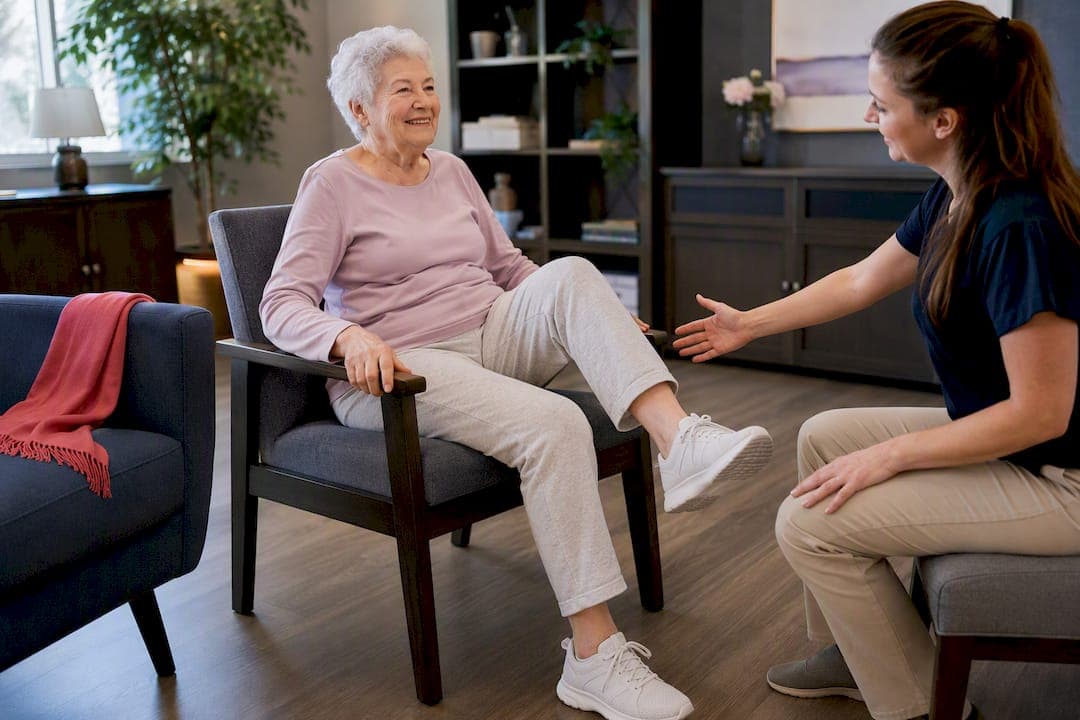
Music, reminiscence, sensory engagement, gentle movement, and structured cognitive stimulation offer the highest immediate payoff for people living with dementia. The main principle behind all of it is simple: match the task to the person's current abilities, keep sessions short, and lean on the senses rather than memory alone. Group cognitive stimulation produces modest, measurable gains, while music and sensory approaches tend to do more for mood and agitation in the moment.
TL;DR:
- Activities should be tailored to the person's stage, with early to mid-stage residents best engaged by cognitive and reminiscence tasks.
- Movement exercises like seated marches or tai chi improve sleep and mood but should be limited to 10-minute sessions for late-stage individuals.
- Sensory stations using textures, scents, and sounds effectively calm agitation, especially during late-stage dementia and sundowning.
- Personalized music playlists and object-handling prompts provide emotional connection and immediate mood improvement with minimal effort.
- Caregivers should prioritize knowing individual preferences and abilities, selecting simple, familiar activities that foster calm, connection, and dignity.
Table of Contents
- What Memory Care Activities Actually Achieve
- Physical and Movement Activities That Are Actually Safe
- Sensory Stations That Calm Without Words
- Music and Reminiscing: The Fastest Route Back to Identity
- Creative and Purposeful Tasks That Preserve Dignity
- Cognitive Stimulation Programs, Explained Simply
- Matching Activity Complexity to Every Stage
- A Sample Weekly Rhythm That Actually Works
- Setting Up a Safe, Engaging Environment
- How Carexroads Helps Families Take the Next Step
- What Actually Moves the Needle in Memory Care
- Find Memory Care Support Built Around Real Programming
- Sources
What Memory Care Activities Actually Achieve
Before picking an activity, it helps to know what you're actually trying to accomplish. Not every good activity needs to build cognition. Some exist purely to calm a person down, restore a sense of identity, or simply fill twenty minutes with something better than staring at a wall.
Here's a working taxonomy that caregivers and staff can use to match the moment to the method:
- Calm and de-escalation: hand massage with lotion, a warm weighted blanket, quiet music at a low volume. Works at every stage, but especially valuable in mid to late dementia when agitation replaces words.
- Connection and identity: looking through an old photo album, listening to a favorite decade's music, handling a familiar object like a wedding ring or a tool from a former job. Best for early to mid stage, when recognition is still intact enough to spark a reaction.
- Movement and physical release: a short seated march, a walk around the garden, folding warm towels fresh from the dryer. Appropriate across all stages with adjustments to duration and support.
- Cognition and mental engagement: simple sorting tasks, themed trivia, a structured Cognitive Stimulation Therapy session. Most effective in early to mid stage, when someone can still follow multi-step instructions.
- Purpose and contribution: setting the table, watering a plant, folding laundry. Valuable at nearly every stage because it taps procedural memory, which tends to survive longer than recall memory.
None of these require special equipment. A basket of scarves, a deck of oversized cards, or a box of old buttons can anchor a twenty-minute activity that a $200 kit couldn't improve on. The goal is a reaction, not a resume line.
Physical and Movement Activities That Are Actually Safe
Movement does more for sleep, mood, and balance in dementia care than it does for memory itself, and that's fine. A person who sleeps better at night and feels less restless during the day is often easier to engage in everything else on this list.
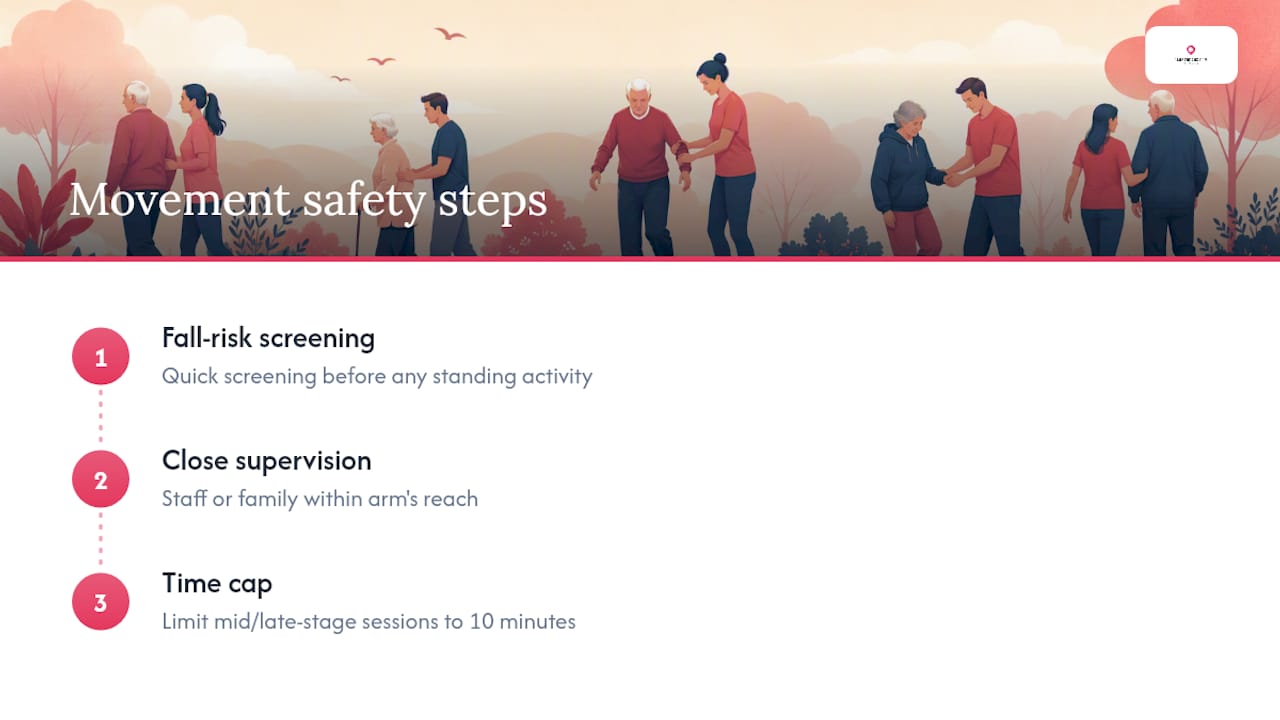
Chair-based exercise is the safest entry point for most memory care settings. A seated march, arm raises timed to music, or gentle stretching can run 10 to 15 minutes without a fall risk. For residents with better mobility, a supervised walk down a hallway or around a garden path adds fresh air and a change of scenery, which alone can reduce restlessness.
Tai chi deserves a specific mention. Research summarized by Harvard Health links gentle tai chi practice to improved balance and cognitive function in older adults, though movements need real adaptation for a memory care group, slower pacing, simpler sequences, and a chair nearby for anyone who tires. Dance works too. Put on a familiar song from someone's twenties and watch a person who hasn't spoken in an hour start swaying and mouthing the words.
Pro Tip: Keep a rotating playlist of upbeat songs from each resident's teenage and young adult years. Movement activities land twice as well when the soundtrack is personal instead of generic.
For mid and late-stage participants, cap sessions at 10 minutes and always have a staff member or family caregiver within arm's reach. A quick fall-risk screening before starting any standing activity is not optional.
Sensory Stations That Calm Without Words
When language starts to fail, the senses often keep working. Touch, smell, and sound can reach someone who can no longer follow a conversation, which is why sensory engagement, built on the same principles behind Snoezelen-style multisensory rooms, has become a core tool in memory care programming. Systematic reviews on multisensory stimulation point to real reductions in apathy and agitation when it's set up thoughtfully.
A sensory station doesn't need a dedicated room. A rotating bin with a few simple additions covers most of what matters:
- Textured fabric squares (velvet, corduroy, faux fur) for tactile stimulation.
- Familiar scents like coffee grounds, lavender sachets, or a bar of old-fashioned soap.
- Soft background sounds, ocean waves, birdsong, or a favorite instrumental track.
- Warm or cool objects, a smooth stone, a warmed rice sock, for hands that need something to hold.
Rotate the bin weekly so novelty doesn't wear off, and clean fabric and tactile items between uses to keep the station sanitary. Sensory stations earn their keep most during late-stage dementia and during sundowning, the late-afternoon agitation spike many families recognize all too well.
Music and Reminiscing: The Fastest Route Back to Identity
Music reaches parts of the brain that dementia often spares longest, which is why personalized playlists are one of the most reliable tools in any caregiver's kit. Research on music interventions shows personalized playlists meaningfully reduce agitation and lift mood in people with dementia, and the effect tends to show up almost immediately rather than building slowly over weeks.
Reminiscence work runs on a similar logic. Its real value is emotional, restoring a sense of self and reducing distress, not necessarily sharpening measurable cognition. A few formats worth building into a weekly rotation:
- Era-based playlists. Build a 20 to 30 minute mix centered on the person's late teens through mid-twenties, when musical memory tends to be strongest.
- Memory boxes and photo collages. Fill a shoebox with small objects tied to a person's life, a recipe card, a ticket stub, a childhood photo, and let them handle each piece without pressure to "remember" details correctly.
- Object-handling prompts. Hand over a tool, a piece of jewelry, or a kitchen item from their era and ask an open-ended question like "What does this remind you of?"
- Small group sing-alongs. Simple percussion instruments, tambourines, hand drums, add a physical outlet alongside the vocal one.
One-to-one sessions work best for someone easily overstimulated by groups; family visits are a natural setting for reminiscence work, since no one knows the right questions better than someone who lived the memories alongside them.
Creative and Purposeful Tasks That Preserve Dignity
Feeling useful matters at every stage of dementia, and activities built around real or near-real tasks tend to hold attention longer than anything labeled "craft time." Folding washcloths, setting a table with unbreakable dishware, or watering a row of potted herbs taps procedural memory, the kind of memory built through repetition over a lifetime, which often outlasts the ability to recall a name or a date.
Art still has a place, just adapted:
- Aquapaint or water-activated paper removes the mess and pressure of traditional painting while still producing a visible result.
- Single-step templates (trace, color, glue) work better than open-ended projects that require planning several steps ahead.
- Large, soft-grip brushes and pre-mixed paint reduce frustration for anyone with reduced fine motor control.
The NIA's guidance on adapting daily activities backs this approach directly, recommending caregivers lean on familiar tasks and sensory engagement rather than introducing something entirely new. Staff and family should praise the process, not the outcome. A crooked table setting or a smudged painting still did its job if the person stayed calm and occupied for twenty minutes.
Cognitive Stimulation Programs, Explained Simply
Group Cognitive Stimulation Therapy is the closest thing memory care has to a standardized, evidence-backed program. A 2023 Cochrane review found that sessions of moderate length run regularly probably produce small, short-term cognitive benefits for people with mild-to-moderate dementia, along with real gains in communication and quality of life.
A simplified CST-style session generally includes:
- A warm-up (a familiar song or a "how are you feeling today" check-in).
- A themed activity (current events, a seasonal topic, a favorite hobby).
- Simple puzzles or word association games kept short enough to avoid frustration.
- Open group discussion built around the theme.
- A calm closing activity to bring energy back down before transitioning elsewhere.
For one-to-one delivery or mid-stage participants, the UAB in-home cognitive stimulation guidebook ranks exercises by difficulty, which helps a family caregiver start at the right level instead of guessing. Drop the group discussion piece and keep the warm-up and themed activity; that alone captures most of the benefit for someone who doesn't do well in groups.
Matching Activity Complexity to Every Stage
The single biggest mistake caregivers make is pitching an activity above or below someone's current ability, which triggers either frustration or boredom, both of which look the same from the outside: withdrawal, agitation, or the person just walking away.
- Early stage: attention spans of 30 to 45 minutes are realistic. Multi-step tasks, book clubs, and full CST sessions work well here.
- Mid stage: plan for 15 to 20 minute windows. Simplify instructions to one step at a time and expect to repeat yourself without frustration showing in your voice.
- Late stage: 5 to 10 minutes is often the ceiling. Sensory activities and one-on-one engagement replace group settings almost entirely.
- Scaffold every activity by reducing choices to two options instead of five, demonstrating the first step yourself, and using a light physical prompt (guiding a hand toward a puzzle piece) rather than a verbal instruction alone.
- Watch for the exit signs: agitation, repeated refusal, or fixation on one small detail all signal it's time to simplify the task or switch to something calmer entirely.
A Sample Weekly Rhythm That Actually Works
Structure matters as much as content. A predictable rhythm, cognitive work earlier in the day, social connection at meals, sensory calm in the afternoon, reduces the disorientation that often triggers sundowning.
| Time of Day | Activity Type | Example |
|---|---|---|
| Morning | Cognitive stimulation | CST-style session or simple sorting task |
| Midday | Social meal | Shared lunch with light conversation prompts |
| Early afternoon | Gentle movement | Seated exercise or short supervised walk |
| Mid afternoon | Sensory/quiet time | Sensory bin or hand massage |
| Evening | Calm routine | Familiar music, dim lighting, low-stimulation tasks |
For unpredictable five to fifteen-minute windows, between appointments or while waiting for a meal, keep a rotating list of micro-activities on hand: folding napkins, a photo book, a textured fidget item, or a short hand-holding conversation about the weather. These "engagement stations" placed near common transition points (hallways, dining room entrances) smooth over the exact moments that tend to spark sundowning-related agitation.
Setting Up a Safe, Engaging Environment
Good programming falls apart fast in a poorly set-up space. A few non-negotiables apply across every activity type:
- Remove choking hazards from sensory bins (small buttons, beads) if the person mouths objects.
- Store sharp tools (scissors, garden shears) out of reach and supervise closely if they're part of an activity.
- Screen for fall risk before any standing or walking activity, and keep a chair within reach at all times.
- Use clear signage and consistent room layouts so engagement stations become part of the daily routine rather than a surprise.
- Cross-train staff and family volunteers on two or three simple activity scripts so coverage gaps don't mean skipped programming.
Track engagement simply: note minutes spent participating, mood before and after (a quick smiley-face scale works fine), and how often someone chooses to join in without prompting. That small data trail tells you faster than intuition alone which activities are actually earning their spot on the calendar.
How Carexroads Helps Families Take the Next Step
Reviews across the providers reflect families who found programming that actually fit their loved one's stage and personality, not a generic activity binder. You can search verified memory care listings, read family reviews, and compare how different communities structure their daily activity calendar before scheduling a tour.
When you contact a provider, ask directly for a sample weekly activity schedule and how staff adapt sessions for residents at different stages. A community that can answer specifically, not vaguely, is usually the one running real programming. Start today by writing down your loved one's three favorite songs, one object with strong personal meaning, and their preferred activity time of day. That short list becomes the foundation any staff member can build on immediately.
What Actually Moves the Needle in Memory Care
The evidence supports a smaller, sharper set of priorities than most activity binders suggest. Personalization beats novelty every time, an era-appropriate playlist built for one person outperforms a generic "music hour" built for a room. Conventional wisdom overweights structured programming and underweights the five-minute sensory moment that happens between scheduled activities, in a hallway, during a transfer, while waiting for lunch.
The conventional advice to "keep them busy" also misses something important: busy isn't the goal, calm and connected is. A person folding towels for ten minutes with a smile on their face has had a more successful afternoon than one sitting through a forty-five minute program while visibly agitated. Cognitive stimulation programs deserve their place, the Cochrane evidence on CST is real, but they're one tool among several, not the centerpiece.
If you take one thing from this toolbox, prioritize knowing the person before you plan the activity. Stage matters, but personal history matters more. That's the piece no calendar template can supply for you.
— Care
Find Memory Care Support Built Around Real Programming
Choosing between an assisted living community, a dedicated memory care unit, or in-home support often comes down to one question: who will actually run these activities day to day, and how consistently? Carexroads is built to help you answer that before you commit to anything.
Search Carexroads's directory of verified providers to compare how different memory care communities and home care agencies structure daily programming, then read real family reviews to see what actually happened once move-in day passed. If in-home support fits your situation better than a facility move, Carexroads's guide to home care and independence walks through how a caregiver can implement the activities covered here inside your own home. When you speak with any provider, ask for a sample weekly schedule and how staff adjust programming as a resident's needs change. Start comparing providers on Carexroads today and bring a specific list of questions to your first tour or consultation call.
This article is general information, not a substitute for advice from a qualified doctor. Consult a qualified healthcare professional about your own circumstances before acting on anything here.
Sources
- Can cognitive stimulation benefit people with dementia? | Cochrane
- Cognitive Stimulation Therapy (CST) overview | PMC
- In-home cognitive stimulation guidebook (UAB)
- Adapting activities for people with Alzheimer’s disease | NIA
- A sharper mind: Tai chi can improve cognitive function | Harvard Health