

An independent living community is a residential setting designed for active older adults who manage their own daily needs while gaining access to social amenities, maintenance-free housing, and limited support services. These communities, sometimes called senior living communities or retirement communities, are not medical facilities. They are lifestyle-centered housing options built around the idea that aging well means staying engaged, connected, and free from the burden of home upkeep. Residents typically range from age 60 and older, and the environment often feels closer to a resort than a care facility, with pools, fitness centers, walking paths, and multiple dining options all within reach.
What is an independent living community and how does it work?
An independent living community is defined as housing for active older adults who manage daily needs on their own, with private residences and shared community amenities. The model is built on a straightforward premise: remove the friction of homeownership and replace it with a lifestyle that supports social connection and personal freedom. Residents live in their own apartments, villas, cottages, or townhomes, and they come and go as they please.
The community structure is what sets these settings apart from simply renting an apartment. Shared dining rooms, fitness centers, scheduled group outings, hobby clubs, and wellness classes are all part of the daily fabric. Social engagement is by design, with open layouts and central gathering spaces built to encourage relationship building among residents rather than passive cohabitation.

One critical distinction: independent living communities typically lack onsite caregivers around the clock. A nurse may be available a few days per week, and 24-hour security responds to emergencies, but hands-on personal care is not part of the standard offering. This is a lifestyle model, not a clinical one.
What features and services do these communities typically offer?
Independent living communities vary widely in their offerings, but most share a core set of features that distinguish them from standard apartment living. Understanding what is typically included helps families set realistic expectations before touring or comparing options.
Housing options generally include:
- Private apartments in mid-rise or garden-style buildings
- Detached cottages or villas for residents who prefer more space
- Townhomes with attached garages in larger campus-style communities
- Studio, one-bedroom, and two-bedroom floor plans to suit different budgets
Community amenities commonly found on-site include:
- Restaurant-style dining rooms and casual café spaces
- Fitness centers, swimming pools, and walking paths
- Libraries, art studios, game rooms, and movie theaters
- Outdoor gardens and patio areas for relaxation
Beyond physical spaces, communities emphasize social and wellness programming through fitness classes, cultural outings, volunteer opportunities, and resident-led clubs. This programming is one of the strongest benefits of independent living because social isolation is a documented health risk for older adults.
Maintenance-free living is another core benefit. Landscaping, exterior repairs, snow removal, and often housekeeping are handled by the community. Residents trade the unpredictability of homeownership for a predictable monthly fee and more time for the activities they actually enjoy.
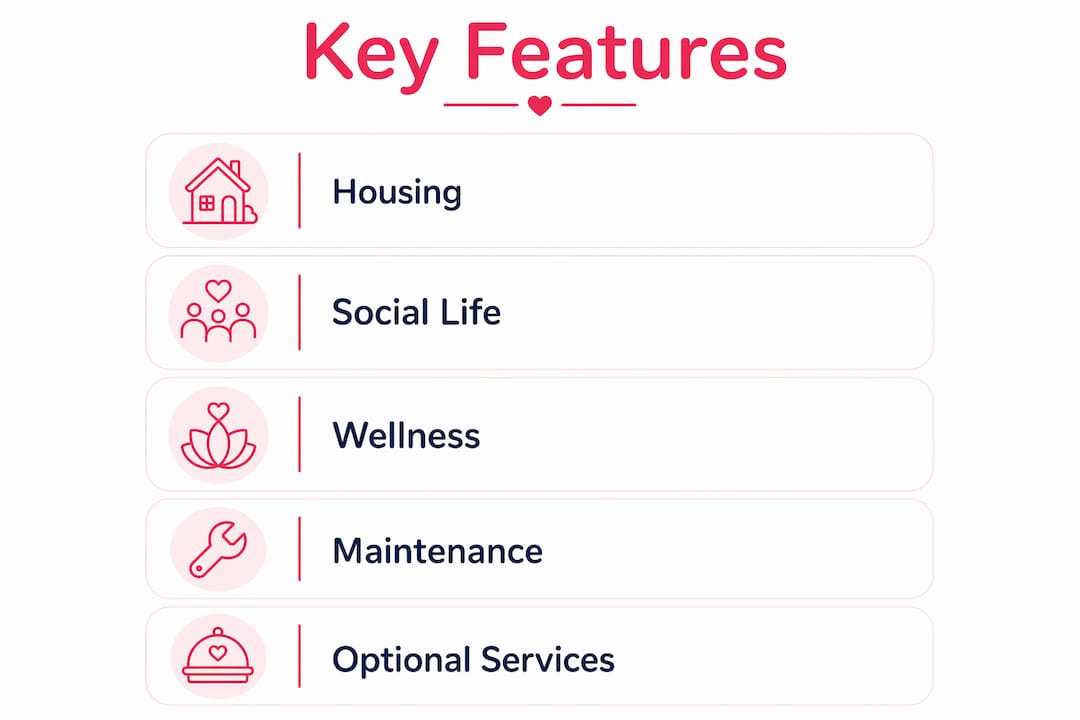
Optional services, which are usually billed separately, may include laundry, scheduled transportation, and additional meal credits. Care offerings vary widely across communities, so the presence of a nurse a few days per week should not be mistaken for comprehensive medical coverage.
Pro Tip: Ask every community you tour for a written list of what is included in the base fee versus what is billed as an add-on. Communities that are reluctant to provide this in writing are worth approaching with caution.
How much does independent living cost and what does it include?
The typical monthly base cost for an independent living community is approximately $3,000, though this figure varies significantly depending on location, community size, and the amenities provided. A community in a major metropolitan area with resort-style amenities will cost considerably more than a smaller community in a rural or suburban setting.
Base fees generally cover the apartment or cottage, utilities such as water and electricity, building security, and some level of housekeeping. What they often do not cover are meal plans, activity fees, transportation services, and certain premium amenities. Costs often bundle hospitality, housing, and amenities, but the biggest day-to-day variables tend to be dining plans and paid activities, which can add several hundred dollars per month to the base figure.
| Cost component | Typically included or extra? |
|---|---|
| Apartment or cottage rent | Included in base fee |
| Utilities (water, electric, cable) | Usually included in base fee |
| 24-hour security | Included in base fee |
| Meal plans and dining credits | Usually an extra cost |
| Fitness center and pool access | Varies by community |
| Transportation services | Usually an extra cost |
| Housekeeping and laundry | Housekeeping often included; laundry may be extra |
| Activity and club fees | Varies by community |
Total cost calculations should always include base housing fees plus variable expenses, since dining plans and paid activities significantly impact monthly budgets. Families who compare only the base rate between communities often find themselves surprised once the full picture emerges.
Pro Tip: Request an all-in monthly estimate from every community you consider, not just the starting rate. Ask them to build a sample monthly bill based on realistic usage of dining, transportation, and activities.
How does independent living differ from assisted living and nursing homes?
Independent living, assisted living, and nursing homes each serve a distinct level of need. Confusing them is one of the most common mistakes families make when starting their search, and the distinction matters both for care quality and for budget planning.
Independent living is for seniors who need very minimal or no help with activities of daily living, which include bathing, dressing, eating, and mobility. Assisted living provides support with those same activities but stops short of the skilled nursing care that nursing homes deliver. The table below captures the key differences at a glance.
| Feature | Independent living | Assisted living | Nursing home |
|---|---|---|---|
| ADL support | None or minimal | Moderate, daily assistance | Full, clinical-level care |
| Medical supervision | Limited, part-time nurse | Medication management, some clinical oversight | 24/7 skilled nursing staff |
| Typical resident profile | Active, self-sufficient seniors | Seniors needing daily help | Seniors with complex medical needs |
| Average monthly cost | ~$3,000 | ~$4,500 to $6,000 | ~$7,000 to $10,000+ |
| Social programming | Extensive | Moderate | Limited |
| Housing style | Private apartments, cottages | Private or semi-private rooms | Semi-private or private rooms |
The lifestyle gap between independent and assisted living is significant. Independent living communities are designed around social engagement and personal freedom. Assisted living communities are designed around daily care routines. A senior who is physically active and cognitively sharp but simply wants to stop managing a home is an ideal candidate for independent living, not assisted living.
It is worth noting that some larger senior living campuses offer a continuum of care, meaning a resident can start in independent living and transition to assisted living or memory care on the same campus if needs change over time. This model, often called a continuing care retirement community or CCRC, provides long-term security for families who want to plan ahead.
Who is best suited for an independent living community?
Independent living works best for seniors who can perform daily activities independently but benefit from the lifestyle, social, and safety supports a community provides. The right candidate is not defined by age alone. It is defined by a combination of physical capability, personal preference, and lifestyle goals.
Consider these questions when evaluating whether independent living is the right fit:
- Can the person bathe, dress, prepare meals, and manage medications without regular assistance?
- Does the person feel isolated at home or express a desire for more social connection?
- Is home maintenance becoming a source of stress, expense, or physical risk?
- Would the person benefit from built-in safety features like emergency call systems and on-site security?
- Is the person open to community living and shared spaces, or do they strongly prefer complete solitude?
A "yes" to the first question and at least two or three of the others suggests independent living is worth exploring seriously. Families sometimes assume that a parent needs assisted living simply because they are older or have had a recent health scare. In many cases, the person is fully capable of self-care and would thrive in an independent living setting with the right social environment around them.
Independent living is fundamentally a lifestyle model, focused on reducing maintenance burdens and enhancing social opportunities rather than providing personal care. Treating it as a care-need filter rather than a care-delivery system helps families make clearer, more confident decisions.
Pro Tip: Think of care needs as a spectrum. If your family member needs help with one or two daily tasks occasionally, home care paired with independent living may be a better fit than moving directly to assisted living.
Key takeaways
Independent living communities are the right choice when a senior is self-sufficient, socially motivated, and ready to trade home maintenance for a lifestyle-centered community with built-in support and connection.
| Point | Details |
|---|---|
| Definition of independent living | A residential model for active seniors who manage daily needs independently, with access to amenities and limited services. |
| Core lifestyle benefit | Maintenance-free living combined with structured social programming reduces isolation and daily burden. |
| Typical monthly cost | Base fees average around $3,000 per month, but dining, activities, and transportation often add to that figure. |
| Key distinction from assisted living | Independent living provides no regular ADL support; assisted living does. Choosing the wrong level costs time and money. |
| Who it suits best | Active seniors who are physically capable but want safety, community, and freedom from homeownership responsibilities. |
What I've learned from watching families navigate this decision
I have seen families spend months researching independent living options near them, only to make the decision based on the wrong criteria. They focus on the amenities brochure and the monthly rate, and they overlook the two things that actually determine whether a senior thrives: the social culture of the community and the transparency of the cost structure.
The communities that consistently earn the highest satisfaction from residents are not necessarily the ones with the most impressive fitness centers. They are the ones where staff know residents by name, where the dining room feels genuinely welcoming, and where the activity calendar reflects what residents actually want to do rather than what looks good in a marketing packet. When you tour a community, eat a meal there. Sit in the common area for 30 minutes. Watch how residents interact with each other and with staff.
On cost transparency, I cannot stress this enough: any community that gives you a base rate without proactively walking you through the full monthly picture is not being fully honest with you. The gap between the advertised starting price and the realistic all-in monthly cost can be $500 to $1,500 or more once dining plans and activity fees are factored in. Ask for a sample monthly statement built around realistic usage before you sign anything.
The most empowering thing a family can do is approach this search with clear criteria. Know what level of care is actually needed, know what the realistic budget is including variables, and visit at least three communities before making any decision. Independent living, when it is the right fit, genuinely improves quality of life. It is not a compromise. For the right person, it is an upgrade.
— Care
How Carexroads helps families find the right senior living option
Finding the right independent living community takes more than a Google search. Carexroads simplifies the process by connecting families with verified senior care providers, trusted reviews from real families, and practical guides built for people who are navigating these decisions for the first time. With a 4.8 average family satisfaction rating, Carexroads is built around one goal: helping you feel confident, not overwhelmed. Whether you are comparing independent living options, exploring assisted living, or evaluating memory care, Carexroads senior care resources give you the clarity to move forward. Start your search today and find a community that fits your family's needs.
FAQ
What is the definition of independent living for seniors?
Independent living is a housing model for active older adults who manage their own daily activities without regular assistance. Communities provide private residences, shared amenities, and social programming rather than hands-on personal care.
How does independent living differ from assisted living?
Independent living offers no regular support with activities of daily living, while assisted living provides daily help with bathing, dressing, and medication management. The cost difference typically ranges from $1,500 to $3,000 or more per month.
What is the average cost of an independent living community?
The average monthly base cost is approximately $3,000, covering housing, utilities, and security. Dining plans, transportation, and activity fees are usually billed separately and can add significantly to that base figure.
What should I expect when touring an independent living community?
Expect to see private apartments or cottages, shared dining and recreation spaces, and a calendar of social activities. Ask specifically what is included in the base fee versus billed as an extra to get an accurate picture of total monthly costs.
Are independent living communities the same as retirement communities?
The terms are often used interchangeably, though retirement community is a broader label that can include independent living, assisted living, or a mix of both on one campus. An independent living community specifically serves seniors who do not need daily personal care assistance.