
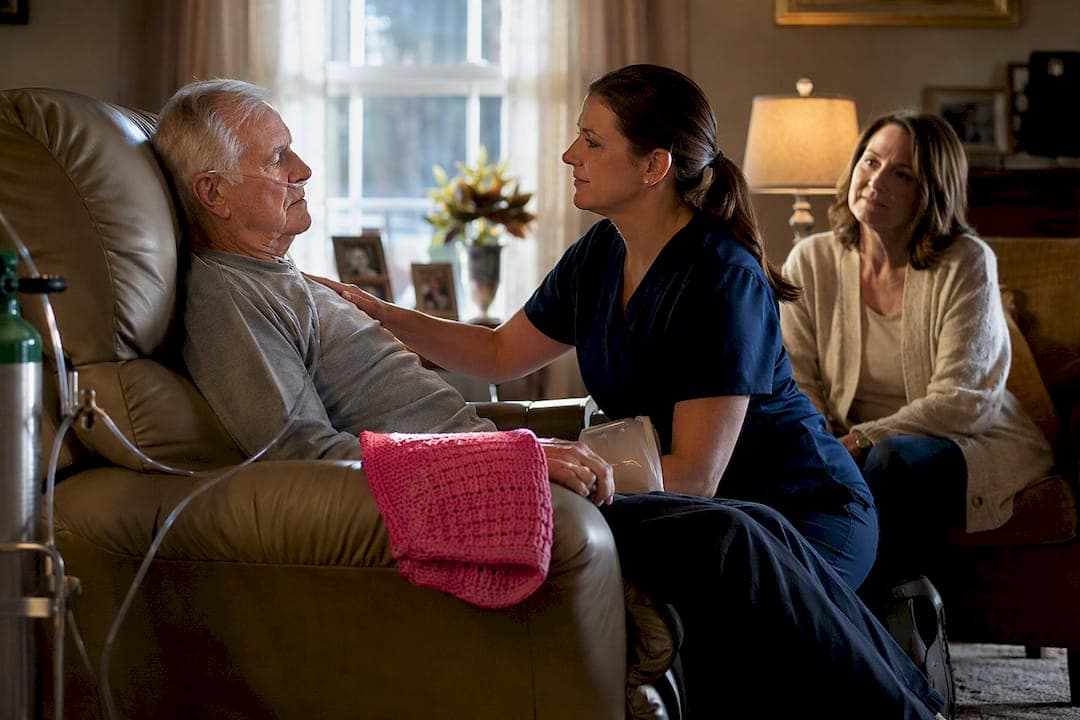
Hospice becomes appropriate when a physician believes a loved one has six months or less to live if the illness follows its usual course, or when the focus of care has clearly shifted from cure to comfort. The checklist below, covering symptoms, hospitalizations, and daily function, can help you decide if now is the right time. Enrollment is voluntary and reversible, and starting earlier often means more support, not less.
TL;DR:
- Frequent hospitalizations, weight loss over 10%, and declining ability with daily activities are strong indicators that hospice evaluation should be considered.
- Symptoms such as unmanageable pain or confusion, along with caregiver exhaustion, often appear gradually but signal when quality-of-life issues outweigh curative efforts.
- Early hospice enrollment provides months of symptom management and family support, while late entry limits these benefits and increases emergency hospital visits.
- Most hospice care occurs at home or familiar environments, and electing or stopping hospice is voluntary and can be reversed without penalties.
- Clearing misconceptions that hospice signifies giving up or that it is limited to a few days can encourage timely discussions and access to supportive services.
Table of Contents
- Signs It May Be Time for Hospice
- Hospice Eligibility: The Six-Month Rule and What It Actually Means
- How Hospice Differs From Palliative Care
- Starting the Hospice Evaluation: Steps and Questions to Ask
- What Hospice Actually Provides for Patients and Families
- How Carexroads Helps Families Take the Next Step
- Common Conditions That Lead to Hospice, and Dementia's Different Path
- The Emotional Weight of the Decision
- Early Versus Late Hospice Enrollment
- Myths About Hospice That Delay the Decision
- Approaching the Timing Decision With Compassion
- Request a Free Hospice Assessment Through Carexroads
- Sources
Signs It May Be Time for Hospice
Families rarely get one dramatic signal that hospice is warranted. Instead, decline shows up in small, accumulating ways that are easy to explain away individually but hard to ignore together.
Watch for these patterns over weeks or months, not days:
- Treatment stops helping or is declined. The disease keeps progressing despite active care, or the patient decides further curative treatment isn't worth the burden.
- Frequent hospitalizations or ER visits. Three or more trips to the hospital within six months often signals that the body is no longer stabilizing between crises, a benchmark commonly used by hospice clinical resources.
- Unintended weight loss. Losing 10% or more of body weight over a few months, especially alongside reduced appetite or trouble swallowing, is one of the clearest clinical indicators hospice teams look for.
- Declining ability with daily activities. Needing help with bathing, dressing, or toileting that wasn't needed a few months ago points to functional decline that usually doesn't reverse.
- Increased sleep and withdrawal. Sleeping most of the day, disengaging from conversation, or losing interest in food and family visits often marks a shift toward the body conserving energy.
- New or worsening confusion. Rising disorientation, especially in someone with dementia, can be tracked against staging tools clinicians use to judge how far the disease has progressed.
- Symptoms that won't come under control. Pain, breathlessness, or agitation that persists despite medication adjustments is a strong signal that a dedicated symptom management team is needed.
- Caregiver exhaustion. When the family managing care at home feels stretched past capacity, that strain itself is a legitimate reason to ask about hospice support.
No single item on this list means hospice is required today. Two or three together, especially paired with a clinician's own concern, usually means it's time to ask for an evaluation.
Hospice Eligibility: The Six-Month Rule and What It Actually Means
Hospice eligibility rests on a specific clinical judgment: a physician must certify that, if the illness runs its usual course, the patient has six months or less to live. That prognosis isn't a countdown clock. Patients who stabilize or improve on hospice can be recertified and continue receiving care well past six months, as long as the clinical picture still supports the diagnosis.
Choosing hospice generally means the goal of care shifts from curing the illness to easing symptoms and preserving quality of life. That often involves stopping treatments aimed at reversing the disease itself, though comfort-focused medications and procedures continue.
A few practical points worth knowing before you call:
- Hospice election is voluntary. Patients can stop hospice and resume curative treatment, then re-enroll later if they become eligible again.
- Medicare covers hospice care for eligible beneficiaries, and most private insurance plans follow similar coverage rules.
- Most hospice agencies offer a free, no-obligation assessment to determine eligibility before any commitment is made.
How Hospice Differs From Palliative Care
Palliative care and hospice both focus on comfort, but they aren't the same program, and mixing them up delays access to help.
Palliative care can start at any point in a serious illness and runs alongside curative treatment. Someone in chemotherapy can receive palliative support for nausea or pain without changing their treatment goals at all.
Hospice is a specific palliative care program reserved for patients with a limited prognosis who have chosen to prioritize comfort over cure. Consider a patient with advanced heart failure who has been receiving palliative symptom management for two years while still pursuing aggressive treatment. When their heart function declines to the point that further intervention no longer helps, the same care team often transitions them into hospice, keeping the comfort-focused services already in place while adding the fuller support hospice provides.
Starting the Hospice Evaluation: Steps and Questions to Ask
Once you recognize the signs, the process of starting hospice is more accessible than most families expect.
- Talk to the primary physician first. Share the specific changes you've noticed, since doctors sometimes hesitate to raise hospice on their own and may need you to open the conversation.
- Ask for a hospice referral. A referral isn't a commitment. It simply starts the formal evaluation process.
- Call a hospice agency directly for a free assessment. You don't always need a referral in hand to request this; many agencies will coordinate with the physician themselves.
- Gather medical records and advance directives. Recent hospital discharge summaries, medication lists, and any existing living will speed up the eligibility review.
When you speak with the clinical team, ask:
- What is the current prognosis, and what symptoms should we expect?
- Which services are covered, and what costs fall outside insurance?
- Is respite care available if the caregiver needs a break?
- How do we stop or pause hospice if the patient improves?
Pro Tip: Write your questions down before the admissions visit. Families under stress often forget half of what they meant to ask, and a hospice nurse would rather answer a written list than have you call back three times.
Admissions visits typically happen within a day or two of the request, and services can often begin the same day eligibility is confirmed.
What Hospice Actually Provides for Patients and Families
Hospice is a coordinated program, not a single service, and it covers both the patient and the people caring for them.
On the clinical side, hospice teams provide skilled nursing visits, symptom and pain management, medications tied to the terminal diagnosis, and medical equipment like hospital beds or oxygen. A physician stays involved in the plan of care even when a nurse handles most visits.
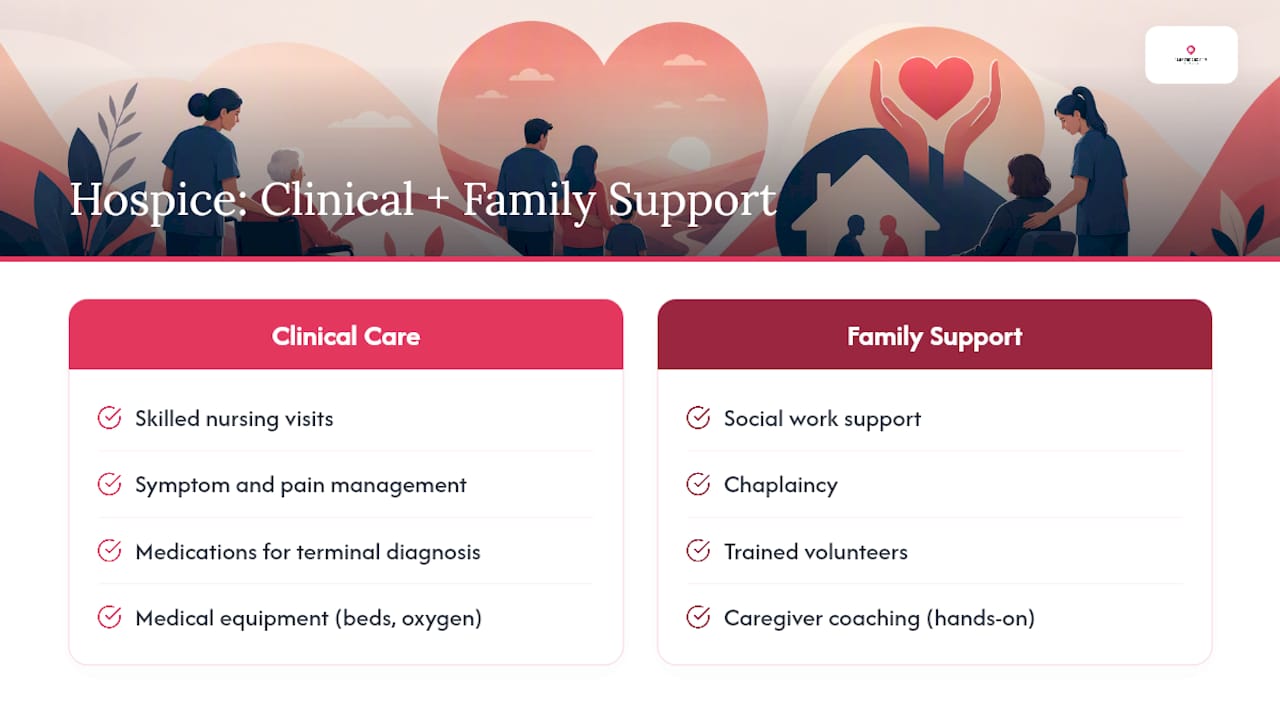
On the human side, hospice typically includes social work support, chaplaincy, trained volunteers, hands-on caregiver coaching, respite stays, and bereavement counseling that continues for the family after the patient dies.
Most people picture hospice happening in a dedicated facility, but the majority of care is delivered wherever the patient already lives, whether that's a private home, assisted living community, or nursing home. Dedicated inpatient hospice units exist for short-term symptom crises, not as the default setting.
How Carexroads Helps Families Take the Next Step
Deciding whether it's time for hospice is hard enough without also having to sort through unfamiliar providers under pressure. Carexroads offers a free hospice care assessment that gives families a clear first step without any cost or obligation.
Every provider listed carries real, verified family reviews rather than anonymous star ratings, and the platform maintains a 4.8 average family satisfaction rating across the services families have used. That transparency matters when you're choosing who will care for someone you love in their final months.
Resources you can use right now:
- The free hospice assessment linked above
- A guide to how hospice supports families through difficult transitions
- Location-based provider search to compare verified hospice agencies near you
Common Conditions That Lead to Hospice, and Dementia's Different Path
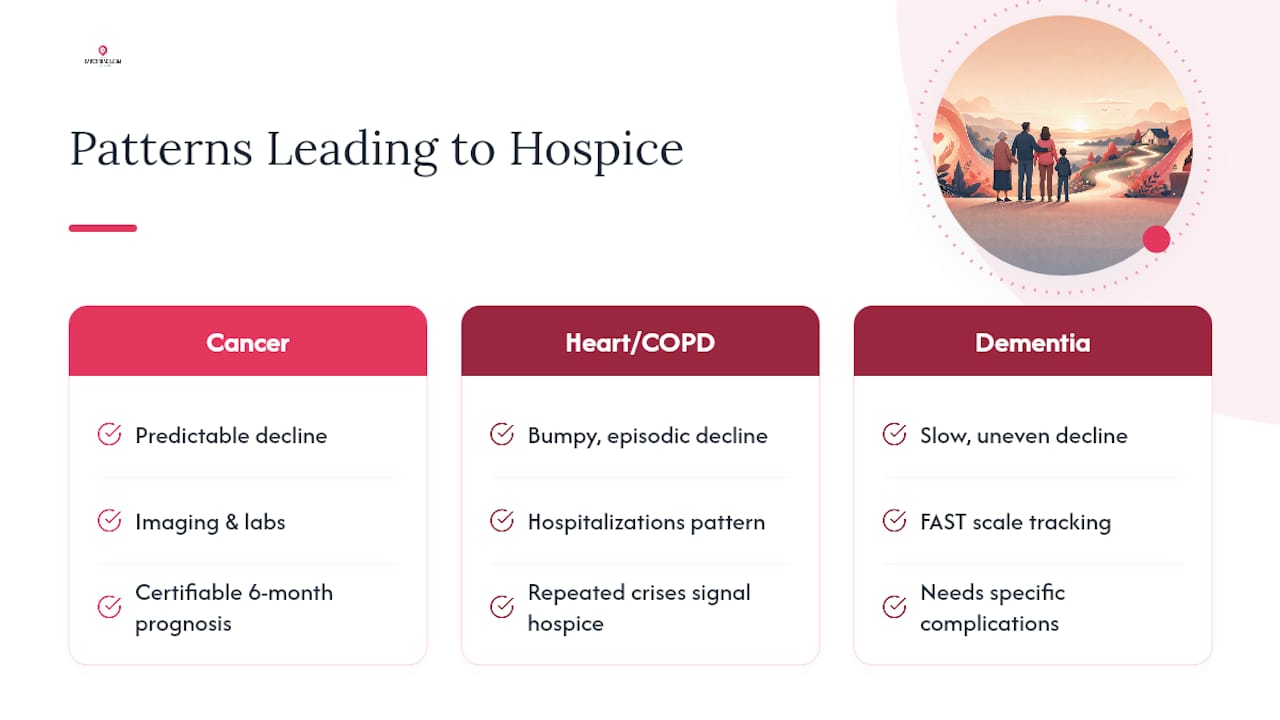
Cancer remains one of the most common reasons families pursue hospice, largely because its trajectory is often more predictable: a patient's decline can be tracked against imaging and lab results, giving physicians clearer footing to certify a six-month prognosis.
Advanced heart failure and chronic obstructive pulmonary disease follow a bumpier path. Patients often decline in a series of hospitalizations, each followed by partial recovery, until the pattern of repeated crises itself becomes the signal that curative treatment is no longer changing the outcome.
Dementia is different still, and it's the condition families most often bring to hospice too late. Because cognitive decline moves slowly and unevenly, clinicians commonly use the FAST scale, or Functional Assessment Staging Tool, to track progression. Eligibility usually depends less on the dementia diagnosis alone and more on specific complications: recurring infections, loss of the ability to walk, or inability to eat and swallow safely. A person with advanced dementia who has had two bouts of pneumonia in six months and can no longer sit up unassisted often meets hospice criteria even though the underlying disease has been present for years.
Recognizing which pattern applies to your loved one's condition helps you know what kind of decline to watch for and when to raise the question with their doctor.
The Emotional Weight of the Decision
Choosing hospice rarely feels like a purely medical decision, even when the clinical facts are clear. For many families, it feels like admitting something they've spent months or years refusing to say out loud.
That reluctance is normal, and it cuts in more than one direction. Patients sometimes resist hospice because they equate it with giving up, even when they're exhausted by treatments that no longer help. Family members sometimes push back even harder, worried that agreeing to hospice means they failed to fight hard enough for their loved one. Siblings can disagree sharply, with one ready to shift toward comfort while another isn't.
None of that guilt reflects the reality of what hospice does. It's a decision about how to spend remaining time, not a verdict on how much someone was loved or how hard the family tried. Giving yourself permission to grieve the decision itself, separately from grieving the person, often makes the conversation easier to have.
It also helps to remember that the patient's own wishes, when known, deserve the most weight in the room. A conversation anchored in "what would they want" tends to move families toward clarity faster than one built around what feels easiest for the people left standing.
Early Versus Late Hospice Enrollment
Timing changes what hospice can actually offer a family, and the difference is larger than most people expect.
Patients enrolled earlier, while still eligible, often receive months of symptom management, caregiver coaching, and emotional support rather than a handful of final days. That extra time lets the hospice team build a real relationship with the patient, adjust medications gradually instead of urgently, and give family caregivers a chance to learn hands-on skills before a crisis forces the issue.
Late enrollment, common when families wait for an unmistakable medical emergency, compresses all of that into a much smaller window. A hospice team meeting a patient for the first time days before death can still manage pain and offer support, but they've lost the chance to prevent the crises that often precede that point, the unnecessary ER visits, the hospital admissions that exhausted everyone involved.
There's no penalty for enrolling too early and improving. Because hospice is voluntary and reversible, families who start the conversation as soon as the signs appear risk nothing by asking early.
Myths About Hospice That Delay the Decision
Misconceptions about hospice cost families real time, and most of them don't hold up once you look closely.
"Hospice means giving up." Hospice is a shift in goals, from curing disease to controlling symptoms and preserving comfort. That's a different kind of active care, not the absence of it.
"Hospice only lasts a few days." Nothing about hospice caps the length of care at days or even weeks. Patients can remain on hospice for months, and services continue as long as the clinical criteria are met.
"Once you choose hospice, you can't change your mind." Election is voluntary, and patients can stop hospice and return to curative treatment at any point, then re-enroll later if their condition qualifies again.
"Hospice requires moving to a facility." Most hospice care happens at home, in assisted living, or in a nursing home. Inpatient units exist mainly for short-term symptom crises, not as the standard setting.
"Hospice is only for the patient." The bereavement counseling, respite care, and caregiver training built into hospice programs exist specifically to support the family, both during care and after the patient dies.
Clearing up even one of these misconceptions early in the conversation often removes the biggest barrier to asking for an evaluation.
Approaching the Timing Decision With Compassion
Most families wait longer than they should, not from denial but from love, hoping one more treatment or one more good week will change the picture. Choosing hospice is a personal decision as much as a medical one, and earlier access typically means more comfort, not less hope. Start the conversation now, plan ahead, and lean on respite support when you need it.
— Care
Request a Free Hospice Assessment Through Carexroads
Once you've recognized the signs and talked with a physician, the next step shouldn't require days of searching through unfamiliar directories or calling agencies one by one. Carexroads gives families a single place to compare verified hospice providers, backed by real reviews from other families who've already walked this path, rather than marketing copy written by the providers themselves.

Every listed provider carries verified family feedback, and the platform's 4.8 average satisfaction rating reflects care experiences that other caregivers rated honestly, not curated testimonials. Requesting the free hospice assessment connects you with a care coordinator who reviews your loved one's situation, answers questions about eligibility and services, and helps you compare providers side by side before you commit to anyone.
If hospice doesn't turn out to be the right fit yet, Carexroads also helps families explore home care options that can support a loved one in the meantime. Either way, the next step is the same: request the assessment, and let a coordinator help you sort through what actually fits your family's situation.
This article is general information, not a substitute for advice from a qualified doctor. Consult a qualified healthcare professional about your own circumstances before acting on anything here.
Sources
- What Are Palliative Care and Hospice Care? — NIA (NIH)
- Hospice care and palliative care — Merck Manual
- Is it Time for Hospice? 3 Questions to Ask Yourself — VITAS Healthcare