
National Healthcare Greenville, SC is defined as a network of senior care facilities and services, anchored by NHC HealthCare, that provides long-term nursing care, short-term rehabilitation, and coordinated primary care for older adults in Greenville County. Families searching for reliable Greenville SC medical services for an aging parent face real complexity. Facilities vary widely in quality, capacity, and staffing. This guide cuts through that complexity by presenting facility performance data, explaining emerging care models like Direct Primary Care, and offering practical steps families can use to evaluate their options with confidence.
What types of senior healthcare services does National Healthcare Greenville offer?
NHC HealthCare Greenville operates as the primary facility-based provider in the area, offering a range of services that cover most senior care needs. The facility runs 132 licensed beds and maintains a 94% occupancy rate, which means roughly 7 beds are typically open for new admissions at any given time. That high occupancy signals strong community demand. Families should contact the facility directly to confirm current availability before planning a transition.
The core services available through NHC HealthCare and affiliated Greenville SC medical services include:
- Long-term nursing care: Around-the-clock skilled nursing for seniors with chronic conditions or significant care needs
- Short-term rehabilitation: Physical, occupational, and speech therapy following a hospital stay or surgery
- Memory care: Specialized programming for residents living with Alzheimer's disease or other forms of dementia
- Wound care and medication management: Clinical services delivered on-site by licensed nursing staff
- Coordinated discharge planning: Support for families transitioning a loved one from hospital to a care setting
Beyond facility-based care, healthcare providers in Greenville also include primary care networks such as Prisma Health and Bon Secours, which offer outpatient and preventive services that complement nursing facility care. Families benefit most when they treat facility care and primary care as connected parts of one plan rather than separate systems.
Pro Tip: Ask any facility you tour whether they have a dedicated discharge planner or social worker on staff. That single role often determines how smoothly a hospital-to-home or hospital-to-facility transition goes.

How do National Healthcare Greenville facilities perform on key quality metrics?
Quality within NHC's Greenville County network is not uniform. Metrics like turnover and CMS star ratings vary by individual facility, which means a strong brand reputation does not guarantee consistent care at every location. Families must evaluate each site on its own record.
Staff turnover is one of the most telling indicators of care quality. NHC HealthCare Mauldin, a nearby facility in the same network, reports a staff turnover rate of 39.2%, compared to the national average of 46.9% for similar long-term care facilities. Lower turnover means residents see the same caregivers consistently, which supports better health outcomes and stronger trust.
| Metric | NHC Mauldin (Local) | National Average |
|---|---|---|
| Staff turnover rate | 39.2% | 46.9% |
| Occupancy rate | ~94% | Varies by region |
| Open beds (approx.) | ~7 | Varies by facility |
| CMS star rating | Facility-specific | 3 stars (median) |
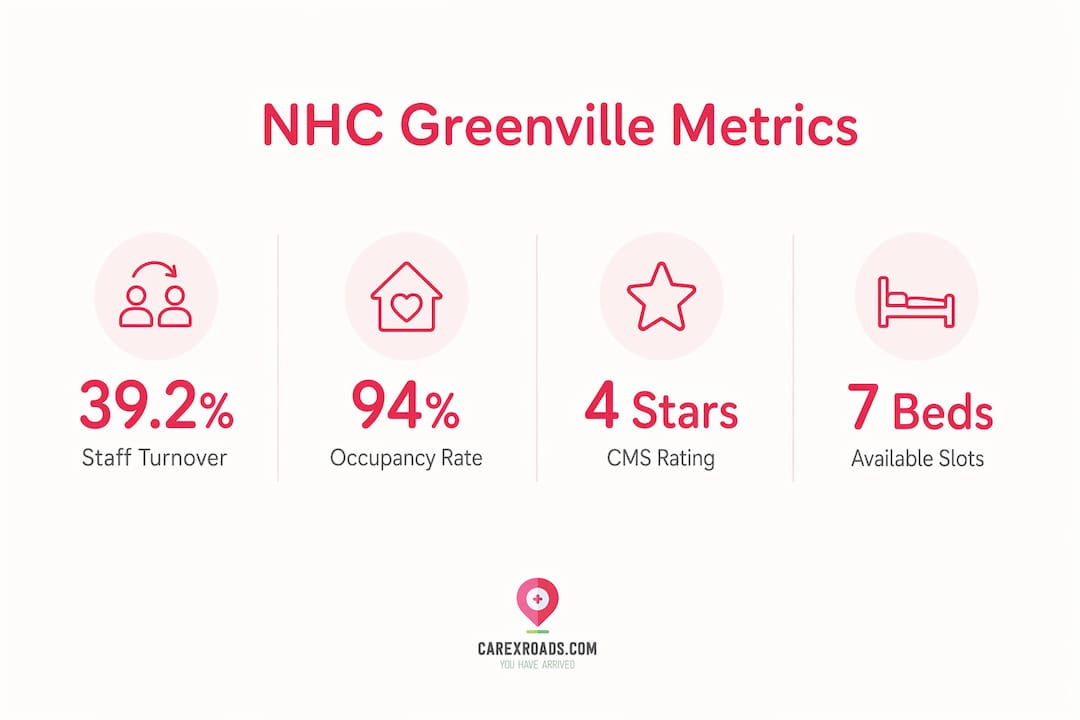
The occupancy figure carries practical weight. A facility running at 94% capacity has limited flexibility for urgent admissions. Families planning a transition for a loved one should start the search weeks in advance, not days after a hospital discharge.
Pro Tip: Visit the CMS Care Compare website and search by ZIP code to pull star ratings, staffing hours, and inspection results for every NHC facility in Greenville County before you schedule a tour.
Why is Direct Primary Care gaining popularity among seniors in Greenville?
Direct Primary Care, commonly called DPC, is a membership-based model where patients pay a flat monthly fee directly to a primary care physician, bypassing traditional insurance billing for routine visits. For seniors managing multiple chronic conditions, this model removes two of the biggest frustrations in standard care: short appointment times and insurance-related delays. Direct Primary Care reduces insurance hassles and gives seniors more time with their doctor during each visit.
Local DPC providers in Greenville offer services that are particularly well-suited to older adults:
- Annual wellness exams included in the membership fee
- Same-day or next-day appointments for acute concerns
- Limited in-home visits, typically up to 2 per year, reducing transportation burdens for seniors with mobility challenges
- Chronic disease coordination covering conditions like diabetes, hypertension, and heart disease
- Direct phone and messaging access to the physician outside of scheduled visits
The contrast with traditional primary care is significant. A standard office visit in a high-volume practice often runs 10–15 minutes. A DPC visit routinely runs 30–60 minutes. That difference matters when a senior is managing five medications and three diagnoses simultaneously.
Consistent primary care relationships through local healthcare systems like Bon Secours also improve chronic disease management for seniors. DPC and integrated network care are not competing options. Many families use a DPC physician for day-to-day management while relying on a hospital-affiliated specialist for complex procedures.
The in-home visit benefit deserves special attention. DPC and boutique medical services that include house calls directly address the mobility and transportation challenges that prevent many seniors from keeping regular appointments. A missed appointment often becomes a missed diagnosis.
What practical steps can families take to choose the right facility or service?
Choosing the right senior care option in Greenville requires a structured approach. Brand recognition is not a reliable guide. Staff-to-resident ratios and state license details are more reliable indicators of nursing home quality than name alone.
Follow these steps to evaluate your options:
- Check CMS star ratings. Use the CMS Care Compare tool to review overall ratings, staffing scores, and health inspection results for each facility you consider.
- Review state inspection history. South Carolina's Department of Health and Environmental Control publishes inspection reports for licensed nursing facilities. Look for patterns in deficiencies, not just isolated incidents.
- Ask about staffing ratios directly. Request the current nurse-to-resident and aide-to-resident ratios during your facility tour. Compare them against state minimums.
- Confirm current bed availability. Given the ~94% occupancy rate across NHC Greenville facilities, call ahead to verify open beds before making plans.
- Explore primary care options alongside facility care. Integrated networks like Prisma Health and Bon Secours, as well as local DPC practices, provide coordinated outpatient care that complements facility-based services.
- Use verified review platforms. Carexroads aggregates real family reviews and verified provider data, making it easier to compare home care, assisted living, and long-term care options side by side.
Families who approach this process with a checklist make better decisions than those who rely on a single recommendation. The goal is to gather enough specific, verifiable information to feel confident before signing any care agreement.
Pro Tip: When you tour a facility, visit during a meal service. The quality of food, the attentiveness of staff, and the atmosphere in the dining room reveal more about daily life than any brochure.
Understanding how to transition a senior to assisted living is also a practical skill worth developing early. The transition process itself, not just the destination, shapes how well a senior adjusts to a new care setting.
Key Takeaways
Families choosing senior care in Greenville need facility-specific data, not brand assumptions, to make confident and safe decisions.
| Point | Details |
|---|---|
| High occupancy limits options | NHC Greenville runs at ~94% capacity, so families should start their search weeks before a transition is needed. |
| Staff turnover signals quality | A turnover rate of 39.2% at NHC Mauldin outperforms the 46.9% national average, indicating stronger care continuity. |
| Evaluate each facility individually | CMS star ratings and inspection histories vary by location within the same network. |
| Direct Primary Care fills gaps | DPC memberships offer same-day visits, in-home care, and longer appointments that benefit seniors with chronic conditions. |
| Use verified data sources | Carexroads provides real family reviews and verified provider comparisons to support informed care decisions. |
What I've learned about choosing senior care in Greenville
After working with families navigating senior care decisions across Greenville County, one pattern stands out clearly. Families who focus on a facility's brand name often miss the details that actually determine quality of life for their loved one. Two NHC facilities in the same county can have meaningfully different staffing levels, inspection records, and resident outcomes. The name on the door tells you very little.
The data matters, but so does what you observe in person. I've seen families walk into a highly rated facility and leave uncomfortable because the staff seemed rushed and distracted. I've also seen families choose a lower-rated facility because the staff knew every resident by name. Both observations carry real weight.
What I find most encouraging about Greenville's senior care environment in 2026 is the growth of blended care models. A senior living in a skilled nursing facility can now maintain a relationship with a Direct Primary Care physician who visits in person. That combination, facility-based nursing care plus a dedicated primary care relationship, gives families something closer to truly coordinated care than either option provides alone.
My honest advice: start the evaluation process before a crisis forces your hand. Families who research options proactively, using tools like Carexroads alongside CMS data, make calmer and better-informed decisions than those reacting to an unexpected hospital discharge.
— Care
How Carexroads helps Greenville families find trusted senior care
Choosing the right care setting for an aging parent is one of the most consequential decisions a family makes. Carexroads exists to make that process clearer and less stressful.
Carexroads provides verified provider listings, real family reviews, and practical guides covering home care, assisted living, memory care, and long-term nursing options in Greenville, SC. The platform carries a 4.8 average family satisfaction rating, reflecting the trust families place in its resources. Whether you are comparing NHC facilities, exploring Direct Primary Care options, or planning a hospital-to-home transition, senior care resources on Carexroads give you the specific, local information you need to move forward with confidence.
FAQ
What is NHC HealthCare Greenville?
NHC HealthCare Greenville is a licensed skilled nursing facility operating 132 beds in Greenville County, SC, offering long-term nursing care, short-term rehabilitation, and specialized services for seniors.
How many beds are available at NHC HealthCare Greenville?
The facility runs at approximately 94% occupancy, leaving around 7 beds open for new admissions at any given time. Families should call ahead to confirm current availability.
What is Direct Primary Care and how does it help seniors?
Direct Primary Care is a membership-based model where seniors pay a flat fee for unlimited primary care visits, same-day appointments, and often in-home visits, removing insurance barriers and rushed appointment times.
How do I evaluate the quality of a nursing home in Greenville, SC?
Check the facility's CMS star rating on Care Compare, review its South Carolina state inspection history, and ask directly about staff-to-resident ratios and turnover rates during your tour.
Does Carexroads cover senior care options in Greenville, SC?
Yes. Carexroads lists verified senior care providers in Greenville, including assisted living, home care, and long-term nursing facilities, with real family reviews to support your decision.