

A post-discharge follow-up protocol is a structured, evidence-based care plan that coordinates medication management, scheduled appointments, and home support services to protect patients after hospital release. For seniors, this plan is not optional. The transition from hospital to home is one of the most medically vulnerable periods an older adult will face, and without a clear follow-up care protocol in place, the risk of complications and readmission rises sharply. Understanding what a post-discharge follow-up protocol includes, and how to support one as a caregiver, gives families the tools to protect the people they love most.
What is a post-discharge follow-up protocol for seniors?
A post-discharge follow-up protocol is the industry term for what many families simply call "the plan after the hospital." It covers five core components: medication reconciliation, written discharge instructions, scheduled outpatient follow-ups, home health referrals, and a communication plan for red flag symptoms. Each element addresses a specific failure point in the transition from hospital to home.
The protocol exists because discharge is not the end of treatment. Clinical standards from 2025–2026 recognize the 30-day post-discharge window as the period of highest patient risk. Complications that go undetected during this window often result in emergency room visits that could have been prevented.
For seniors specifically, the stakes are higher. Older adults frequently manage multiple chronic conditions, take several medications, and have reduced capacity to recognize or report new symptoms. A well-structured follow-up care plan accounts for all of these factors before the patient leaves the building.

What are the essential components of a post-discharge follow-up protocol for seniors?
The five core elements of a follow-up protocol each serve a distinct protective function:
- Medication reconciliation. This process compares the medications prescribed at discharge with every drug, supplement, and over-the-counter product the patient takes at home. Medication errors contribute to up to 25% of all hospital readmissions. A single missed discrepancy can trigger a dangerous drug interaction or dosing gap.
- Written discharge instructions. Hospital staff are required to provide written instructions covering diagnosis, treatment summary, activity restrictions, dietary guidance, and follow-up steps. These documents give caregivers a reference point when questions arise at home.
- Scheduled follow-up appointments. Confirming a primary care visit before the patient leaves the hospital is a non-negotiable step. Appointments should be booked, not just recommended.
- Home health referrals and authorization. Home health services must be authorized by insurance prior to discharge. Caregivers should confirm this authorization is complete before the patient arrives home.
- Red flag communication plan. The protocol must define which symptoms require an immediate call to the provider and which require a 911 response. Fever, sudden confusion, chest pain, and significant swelling are common red flags for seniors post-discharge.
Pro Tip: Ask the discharge coordinator to walk through the red flag symptom list with you verbally, not just in writing. Hearing it once makes it easier to recall under stress.
How does a post-discharge follow-up protocol reduce readmission risk?
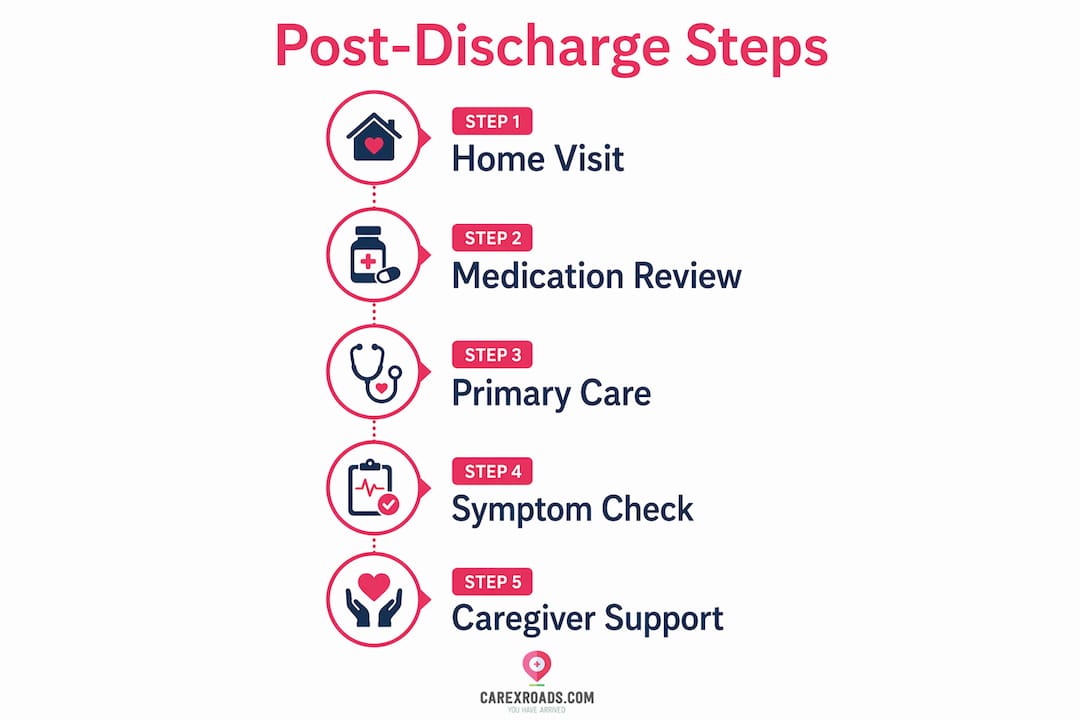
Timing is the single most powerful variable in reducing readmission. Scheduling a follow-up with a primary care physician within 3–10 days post-discharge is now considered the clinical gold standard, with 7 days as the target for high-risk patients. Missing this window significantly increases the probability of a return hospital visit.
Home visits within the first 24–48 hours after discharge add another layer of protection. A visiting nurse or home health aide can compare the discharge medication list with what is actually in the home, check vital signs, and identify safety hazards the family may not notice. These early visits catch problems before they escalate.
"Successful care transitions depend on viewing discharge as a continuum requiring active family and professional collaboration over weeks, not a single event. The 30-day post-discharge window carries the highest patient risk, and proactive communication with primary care during this time is critical to prevent setbacks."
Effective follow-up care also requires a multidimensional assessment. Physical, functional, psychological, and social needs must all be evaluated, not just the primary diagnosis. A senior who is medically stable but socially isolated or cognitively impaired faces a very different recovery path than one with strong family support.
| Follow-up action | Recommended timing | Purpose |
|---|---|---|
| First home visit | Within 24–48 hours | Medication check, vital signs, safety review |
| Primary care appointment | Within 3–10 days | Clinical assessment, lab review, care adjustment |
| Specialist follow-up | As directed at discharge | Condition-specific monitoring |
| 30-day check-in | End of vulnerability window | Confirm stability, update care plan |
Caregiver participation is not a bonus feature of this process. It is a core requirement. Caregivers who actively monitor symptoms, attend appointments, and communicate changes to providers dramatically improve protocol adherence and patient safety.
What practical steps can families and caregivers take?
Caregivers who prepare before discharge day are far more effective than those who react after problems appear. These steps give you a clear path to follow.
-
Bring a complete medication list. Write down every medication, vitamin, and supplement your loved one takes at home, including dosages. Hand this list to the nurse or discharge planner and ask them to compare it against the hospital's discharge list. Medication discrepancies account for 25% of hospital readmissions, and this one step addresses the most common cause.
-
Confirm all discharge instructions are in writing. Ask for a printed summary that includes the diagnosis, all medications with instructions, activity limits, dietary restrictions, and the names and phone numbers of all follow-up providers. Do not leave without this document.
-
Schedule the follow-up appointment before you leave. Call the primary care office from the hospital if needed. When speaking with the scheduler, use the phrase "just discharged." This specific language triggers priority booking within the 3–10 day window and prevents your loved one from being placed on a standard wait list.
-
Ask about home equipment before discharge. Shower benches, grab bars, and wheelchairs must be in place before the patient arrives home. Discharge without these arrangements shifts the safety responsibility entirely to the family. Confirm that any ordered equipment has been delivered or is scheduled for delivery.
-
Assign accountability for pending test results. Before leaving, ask who is responsible for following up on any lab work, imaging, or biopsy results that were not completed before discharge. Get a specific name and a communication plan. Untracked results are a common and preventable source of delayed treatment.
Pro Tip: Keep a small notebook or phone note dedicated to your loved one's post-discharge care. Log every symptom, every call to a provider, and every medication change. This record becomes invaluable at follow-up appointments.
How do healthcare providers coordinate post-discharge care?
Hospital discharge planning teams carry the primary responsibility for organizing the transition. These teams typically include a discharge planner, a social worker, and a case manager who work together to assess the patient's home environment, arrange services, and communicate the plan to outpatient providers.
The discharge summary is the central document in this process. Clear discharge summaries include the diagnosis, treatment provided, current medications, pending results, and follow-up instructions. These summaries are shared electronically with the patient's primary care physician so the outpatient team is informed before the first appointment.
Discharge coordinators serve as the liaison between the hospital, the patient, and the family. They authorize home health services, coordinate durable medical equipment, and confirm that insurance approvals are in place. Families who build a direct relationship with the discharge coordinator before the patient leaves gain a significant advantage in navigating the first days at home.
Teleconsultation and follow-up phone calls from the hospital care team have become standard practice in the 30-day post-discharge period. These check-ins allow providers to catch early warning signs and adjust the care plan without requiring an office visit. Families should expect and welcome these calls, and should not hesitate to initiate contact if something changes.
The senior care transition process works best when families understand that their role does not end at the hospital door. Active participation throughout the 30-day window is what separates a smooth recovery from a preventable crisis.
Key Takeaways
A post-discharge follow-up protocol is the structured plan that protects seniors during the 30-day vulnerability window after hospital release, requiring coordinated medication reconciliation, timely appointments, and active caregiver involvement to prevent readmission.
| Point | Details |
|---|---|
| Timing is critical | Schedule a primary care follow-up within 3–10 days of discharge to reduce readmission risk. |
| Medication reconciliation saves lives | Compare home and hospital medication lists within 24–48 hours to catch dangerous discrepancies. |
| Caregivers are part of the protocol | Active caregiver participation in monitoring and communication directly improves patient safety. |
| Discharge is a 30-day process | The highest risk period extends a full month after hospital release, not just the first few days. |
| Multidimensional assessment matters | Effective follow-up addresses physical, functional, psychological, and social needs together. |
What I've learned about discharge that most families find out too late
Families often treat the moment of discharge as a finish line. The paperwork is signed, the car is waiting, and everyone is relieved to be going home. That relief is understandable. It is also the most dangerous moment in the entire hospital stay.
What I have seen, time and again, is that the families who struggle most are not the ones who lacked love or dedication. They are the ones who were not told that discharge is a process, not an event. The 30-day window after leaving the hospital is when the real work begins, and most families walk into it without a clear plan.
Medication reconciliation is where I see the most preventable harm. A senior may come home with a new prescription that interacts with a supplement they have taken for years. No one flagged it because no one asked about the supplement. Bringing that complete home medication list to the hospital is the single most protective thing a caregiver can do.
Early home visits also matter far more than most families realize. A nurse who visits within 48 hours of discharge is not just checking boxes. She is looking at the actual home environment, watching how the patient moves, and catching the subtle signs of a developing problem before it becomes a crisis. Families who recognize warning signs in seniors early are far better positioned to act before a situation escalates.
My honest advice: be the caregiver who asks the uncomfortable questions before discharge. Ask who owns the pending test results. Ask what the red flag symptoms are. Ask whether the home equipment has been ordered. The hospital team expects these questions. Asking them is not a burden. It is the most caring thing you can do.
— Care
Carexroads resources for families managing post-discharge care
Bringing a loved one home from the hospital is one of the most meaningful and demanding responsibilities a family can take on. Having the right information and the right support makes all the difference.
Carexroads offers a trusted resource hub for families navigating hospital-to-home care, with verified provider listings, practical discharge planning guides, and real family reviews that reflect what post-discharge support actually looks like in practice. Whether you are coordinating home health services, comparing care options, or looking for guidance on what to ask before discharge day, Carexroads connects you with the resources and professionals who specialize in exactly this transition. Families using Carexroads report a 4.8 average satisfaction rating, reflecting the confidence that comes from having clear, reliable information when it matters most.
FAQ
What is a post-discharge follow-up protocol?
A post-discharge follow-up protocol is a structured care plan that coordinates medication reconciliation, scheduled appointments, home health services, and symptom monitoring after a patient leaves the hospital. It is designed to prevent complications and reduce the risk of readmission, particularly for seniors.
When should the first follow-up appointment happen after discharge?
The first outpatient follow-up should occur within 3–10 days of discharge, with 7 days considered the clinical gold standard for high-risk patients. Scheduling this appointment before leaving the hospital is the most reliable way to meet this timeline.
What are red flag symptoms caregivers should watch for after discharge?
Red flag symptoms typically include sudden confusion, fever, chest pain, significant swelling, difficulty breathing, and any new or worsening pain. The discharge instructions should list condition-specific red flags; caregivers should review this list before the patient arrives home.
Why is medication reconciliation so important after discharge?
Medication errors account for up to 25% of hospital readmissions. Reconciliation compares the hospital's discharge medication list with every drug and supplement the patient takes at home, catching dangerous discrepancies before they cause harm.
How long does the post-discharge vulnerability period last?
The highest-risk period extends for 30 days after hospital release. Clinical experts identify this window as the time when proactive communication with primary care and active caregiver monitoring are most critical to a safe recovery.