

Yes, a reverse mortgage can pay for assisted living, but only within strict limits set by federal rules. The loan stays in force only while the home remains a borrower's or eligible co-borrower's primary residence, so a single applicant who moves out permanently typically triggers repayment. The strategy works best when a spouse stays home, when a family opens a line of credit early to build a care reserve, or when it bridges a short-term gap. Weigh that against upfront fees and a shrinking inheritance before signing anything.
TL;DR:
- Using a reverse mortgage for assisted living is most effective when funds are accessed early through a line of credit that can grow over time.
- A permanent move to assisted living generally triggers loan repayment, except when a spouse remains in the home or the move is temporary.
- The total upfront costs, including origination, insurance, and closing fees, are significant but spread out over years, making the option more viable for longer-term stays.
- Families should prioritize counseling and planning months ahead to establish a reserve, as rapid moves within weeks are better financed through sale or short-term loans.
- Comparing alternatives like selling, a HELOC, long-term care insurance, or VA benefits is crucial, as reverse mortgages are not always the cheapest or best solution.
Table of Contents
- How Does a Reverse Mortgage For Assisted Living Actually Work?
- Who Qualifies, and Why Is HUD Counseling Required?
- What Strategies Help Families Fund Assisted Living With Home Equity?
- What Are the Pros and Cons for Assisted Living Planning?
- What Happens to the Loan When Someone Moves to Assisted Living?
- What Do Reverse Mortgages Cost, and When Do They Pay Off?
- What Alternatives Should You Compare First?
- How Do You Decide? A Practical Checklist
- Where Carexroads Fits Into the Financing Picture
- A Pragmatic, Family-First Take
- Compare Assisted Living Options Before You Commit Home Equity
- Where to Confirm the Rules Before You Sign
- Sources
- FAQ
How Does a Reverse Mortgage For Assisted Living Actually Work?
A reverse mortgage, formally called a Home Equity Conversion Mortgage (HECM), lets homeowners 62 and older convert home equity into cash without monthly payments. It is a non-recourse loan. Federal insurance guarantees that neither the borrower nor their heirs will owe more than the home is worth, even if the loan balance eventually exceeds the sale price. The balance grows over time as interest and fees accrue, and repayment is triggered when the last borrower sells, moves out permanently, or passes away.
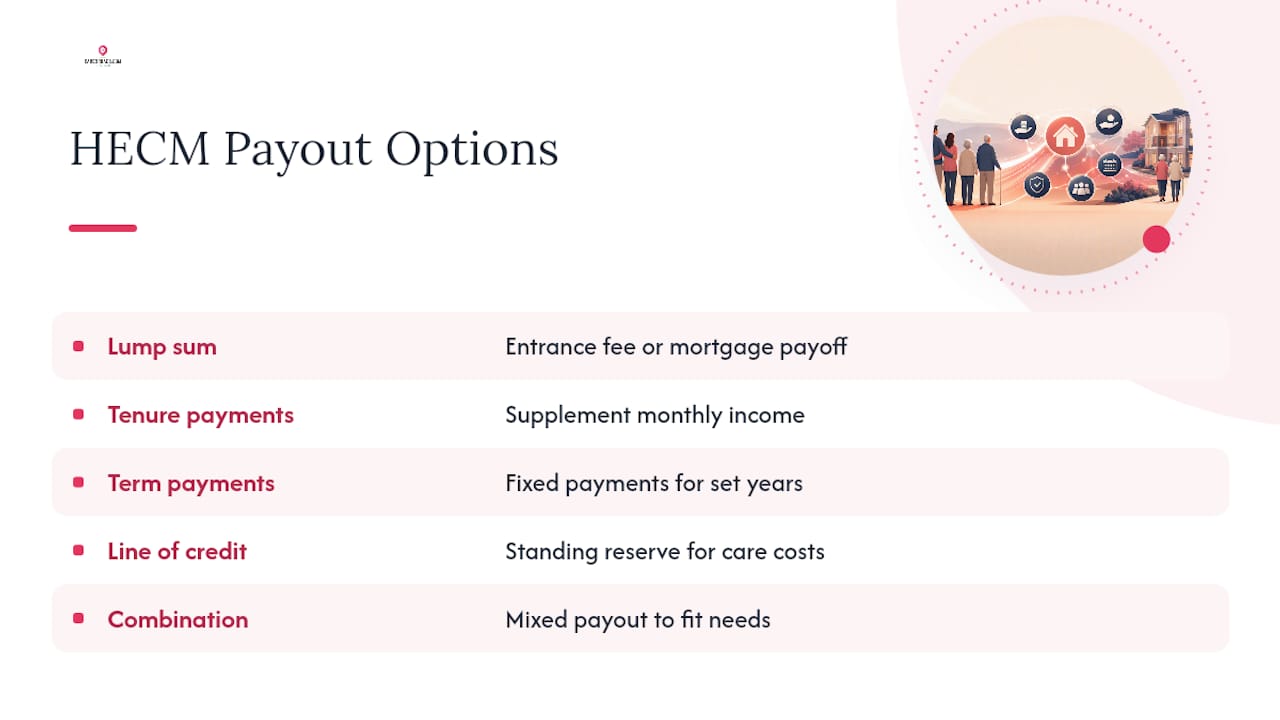
Borrowers choose how to receive the money. Options include a lump sum, tenure payments for as long as the home is occupied, a term payment over a set number of years, a line of credit, or some combination of these. Each maps to a different assisted living need: a lump sum can cover an entrance fee or payoff on an existing mortgage, tenure payments can supplement Social Security or pension income against monthly rent, and a line of credit works as a standing reserve for whenever care costs actually arrive.
Who Qualifies, and Why Is HUD Counseling Required?
Eligibility starts with age (62 or older, with some flexibility for younger spouses), meaningful home equity, and using the home as a primary residence. Before closing, every applicant must sit down with a HUD-approved counselor, a mandatory step designed to walk through costs, alternatives, and long-term obligations, not just loan mechanics.
Lenders also run a financial assessment to confirm the borrower can keep up with property taxes, homeowners insurance, and basic maintenance. These aren't optional extras. Falling behind on any of them can trigger foreclosure even though there's no monthly mortgage payment to miss, according to federal consumer protection guidance.
What Strategies Help Families Fund Assisted Living With Home Equity?
Families rarely use a reverse mortgage as a single lump withdrawal. The more common approach blends a few tactics depending on timing and how urgent the care need is.
- Open a line of credit early. An unused HECM line of credit grows at its effective interest rate over time, which can turn a modest reserve into a substantial funding cushion years before care is needed.
- Use tenure or term payments to supplement fixed income and cover the gap between Social Security or a pension and the monthly assisted living bill.
- Take a lump sum to pay off an existing mortgage, cover an entrance fee, or fund an immediate move when a facility requires payment upfront.
- Draw from the line of credit during market downturns instead of selling stocks at a loss, letting an investment portfolio recover before the family taps it again.
Pro Tip: Opening a HECM line of credit years before you think you'll need it costs little beyond initial fees, and the unused balance keeps growing. Waiting until a crisis hits means starting that clock too late.
What Are the Pros and Cons for Assisted Living Planning?
A reverse mortgage removes the monthly mortgage payment, and because HECMs carry federal insurance, the borrower's family is never on the hook for more than the home's value. The line of credit option grows even when unused, and disbursements are flexible enough to match irregular care costs.
The tradeoffs are real. Upfront and ongoing costs eat into the equity families are trying to preserve. Every dollar borrowed reduces what heirs eventually inherit, and occupancy rules can force repayment sooner than a family expects. Property taxes, insurance, and upkeep remain the borrower's responsibility for as long as the loan is active.
- A reverse mortgage tends to fit families expecting to stay in the home for years, or where one spouse remains there.
- It fits less well when a move to assisted living looks permanent and imminent for the sole borrower.
What Happens to the Loan When Someone Moves to Assisted Living?
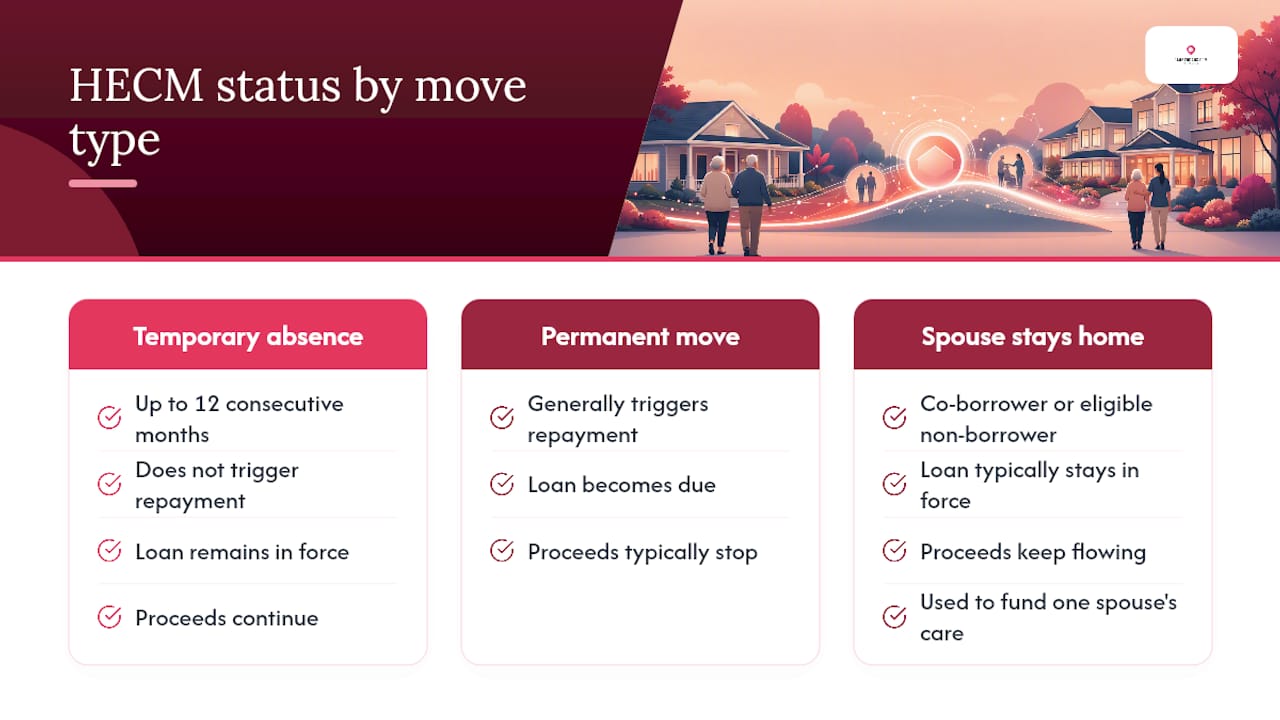
Federal rules give borrowers a specific window for temporary absences. A stay in a rehab facility or hospital of up to 12 consecutive months doesn't trigger repayment, but a permanent move to assisted living generally does, according to CFPB guidance on reverse mortgages and long-term care moves.
Married couples have an important safeguard. If one spouse enters assisted living while the other remains home as a co-borrower or eligible non-borrowing spouse, the loan typically stays in force and proceeds keep flowing. This co-borrower structure is one of the most reliable ways families use reverse mortgages to fund one spouse's care without upending the other's housing.
One more planning note: the application-to-closing timeline for a HECM usually runs several weeks once counseling and underwriting are complete. That makes it a poor tool for an urgent placement happening this week, and a much better one when arranged months ahead of an expected transition.
What Do Reverse Mortgages Cost, and When Do They Pay Off?
Upfront costs typically include an origination fee, an upfront mortgage insurance premium of roughly 2% of the home's value, an appraisal, and standard closing costs, plus an ongoing annual mortgage insurance premium of around 0.5%. Together these can run into the thousands of dollars before a single care bill gets paid.
The math that matters: those fixed costs get spread over however long the borrower stays in the home. A three-year stay makes the fees expensive relative to the benefit; a horizon of seven or more years, or a spouse remaining in the home indefinitely, spreads that same cost thin enough that the line of credit growth and payment flexibility usually outweigh it.
What Alternatives Should You Compare First?
A reverse mortgage isn't the only lever for converting home equity into assisted living funding, and it isn't always the cheapest one.
- Selling the home usually produces the largest immediate cash pile with no interest accruing against it, though it forfeits the option value of keeping the property.
- A HELOC or cash-out refinance starts cheaper but requires monthly payments and income qualification a fixed-income retiree may not meet.
- Long-term care insurance and VA Aid & Attendance benefits are worth checking first if a veteran or policyholder qualifies. Medicaid, by contrast, often does not cover assisted living costs directly and varies significantly by state.
- Bridge loans or converting a life insurance policy's cash value can cover a short, urgent gap without touching home equity at all.
How Do You Decide? A Practical Checklist
Before contacting a lender, pull together the numbers that actually drive this decision.
- Get a current home value estimate and note any outstanding mortgage balance.
- Total the monthly assisted living cost you're comparing it against, plus other income and savings.
- Schedule a session with a HUD-approved HECM counselor and request quotes from more than one lender.
- If care is needed within weeks, lean toward selling or a short-term bridge loan instead of a HECM, which takes time to close.
- If the timeline allows months of lead time, opening a line of credit now gives it years to grow before it's needed.
- Talk with adult children or heirs about the tradeoff between funding care now and preserving equity later, and write the decision down.
Where Carexroads Fits Into the Financing Picture
A funding plan only matters once you know what facility it's paying for. Carexroads pairs verified provider reviews and a 4.8 average family satisfaction rating with guidance on Medicaid coverage limits and safe discharge planning, so a reverse mortgage decision connects to real facility costs, not guesswork.
A Pragmatic, Family-First Take
The families who navigate this well treat HUD counseling as a real checkpoint, not a formality, and they loop heirs into the conversation before signing anything. Reverse mortgages help. They don't erase the tradeoff between funding care today and preserving equity tomorrow.
— Care
Compare Assisted Living Options Before You Commit Home Equity
Once you've worked through the financing math, the harder question is usually which facility actually fits. A service is available to help fill that gap: a searchable directory of assisted living, memory care, and home care providers backed by real family reviews, so choices are informed after deciding how to pay for care.

Whether you're weighing a HECM line of credit against selling the home, or you've already got proceeds ready to deploy, start by comparing assisted living and memory care providers near your family, checking fee structures against the true cost of assisted living community fees, and requesting a free in-home care assessment to see how your specific budget lines up with real options in your area.
Where to Confirm the Rules Before You Sign
- HUD's HECM program pages list lender requirements and counseling resources.
- The CFPB's reverse mortgage guide covers repayment triggers and disbursement choices in plain language.
- Always talk to a HUD-approved counselor before signing any loan documents.
This article is general information, not a substitute for advice from a qualified financial advisor. Consult a qualified financial professional about your own circumstances before acting on anything here.
Sources
- How much money can I get with a reverse mortgage and what are my payment options? | Consumer Financial Protection Bureau
- Considering a reverse mortgage? What to think about | CFPB discussion guide (PDF)
- Reverse mortgages | Federal Trade Commission
FAQ
Can You Use a Reverse Mortgage to Pay for Assisted Living?
Yes, proceeds from a reverse mortgage can cover assisted living costs, but the loan generally becomes due once the last borrower permanently leaves the home. It works best when a spouse remains in the home or when funds are set aside as a reserve before a move happens.
What Is a Better Option Than a Reverse Mortgage?
There's no universal answer. Selling the home outright usually yields more upfront cash with no interest charges, while long-term care insurance or VA Aid & Attendance benefits are worth checking first if you qualify, since they don't touch home equity at all.
What Are the Downsides of Reverse Mortgages for Seniors?
The biggest downsides are upfront costs, a growing loan balance that reduces what heirs inherit, and the requirement to keep paying property taxes and insurance or risk foreclosure. Moving permanently into assisted living without a co-borrower remaining at home typically triggers repayment.
What Disqualifies You From a Reverse Mortgage?
Being under 62, having insufficient home equity, or not using the home as a primary residence can all disqualify an applicant. Failing the lender's financial assessment, which checks whether you can keep up with taxes, insurance, and upkeep, can also block approval.
Can Carexroads Help Me Find Assisted Living After I Secure Financing?
Yes. Carexroads offers a searchable directory of assisted living and memory care providers with verified family reviews, plus guides on comparing facility fees so your financing plan matches an actual budget.