

A CCRC entrance fee is a one-time payment that secures your place in a continuing care retirement community and, typically, access to its full continuum of care. National averages have climbed to roughly $480,000, though the honest range runs from about $40,000 to $2 million depending on contract and unit. The trade-off is straightforward: you give up liquidity today for predictable, sometimes discounted, care later.
TL;DR:
- Entrance fees for CCRCs range from $40,000 to $2 million, with the national average approximately $480,000, influenced heavily by location and unit size.
- Average entrance fees have increased by about 22.3% between 2020 and 2025, outpacing general inflation and affecting pricing comparisons over time.
- The three main contract types—lifecare, modified, and fee-for-service—differ in upfront costs and future care risk, impacting long-term financial outcomes.
- Entrance fees fund community infrastructure and reserves, and refund terms vary widely; understanding contract specifics and requesting written calculations are crucial.
- Monthly fees typically reach around $4,200 and grow about 4% annually, which can surpass the cost of aging independently with home care if higher care levels are not needed.
Table of Contents
- How Much Do CCRC Entrance Fees Cost Right Now?
- What Are the Three CCRC Contract Types?
- What Does an Entrance Fee Actually Pay For?
- How Much Are Monthly Fees on Top of the Entrance Payment?
- How Do You Check a Community's Financial Health Before Paying?
- Can You Deduct Part of Your CCRC Entrance Fee?
- Is an Entrance Fee Worth It for Your Family?
- Where Carexroads Fits Into Your Research
- Sources
- FAQ
How Much Do CCRC Entrance Fees Cost Right Now?
Entrance costs for a CCRC vary more than most families expect walking in. Industry data puts the national average near $400,000, but that single number hides a spread from $40,000 for a modest fee-for-service studio to $2 million for a high-end lifecare estate on a coastal campus. Location does most of the work here. A community outside Phoenix charges very differently than one in coastal Connecticut, and unit size, floor plan, and the number of care services bundled into the deal move the price further.
The trend line matters as much as the snapshot. NIC MAP tracking shows average entrance fees rising from about $400,000 in 2020 to roughly $480,000 by 2025, a cumulative increase near 22.3% over five years. That is faster than general inflation over the same stretch, and it reflects rising construction costs, higher demand from aging Baby Boomers, and communities repricing older contracts to match today's cost of care.
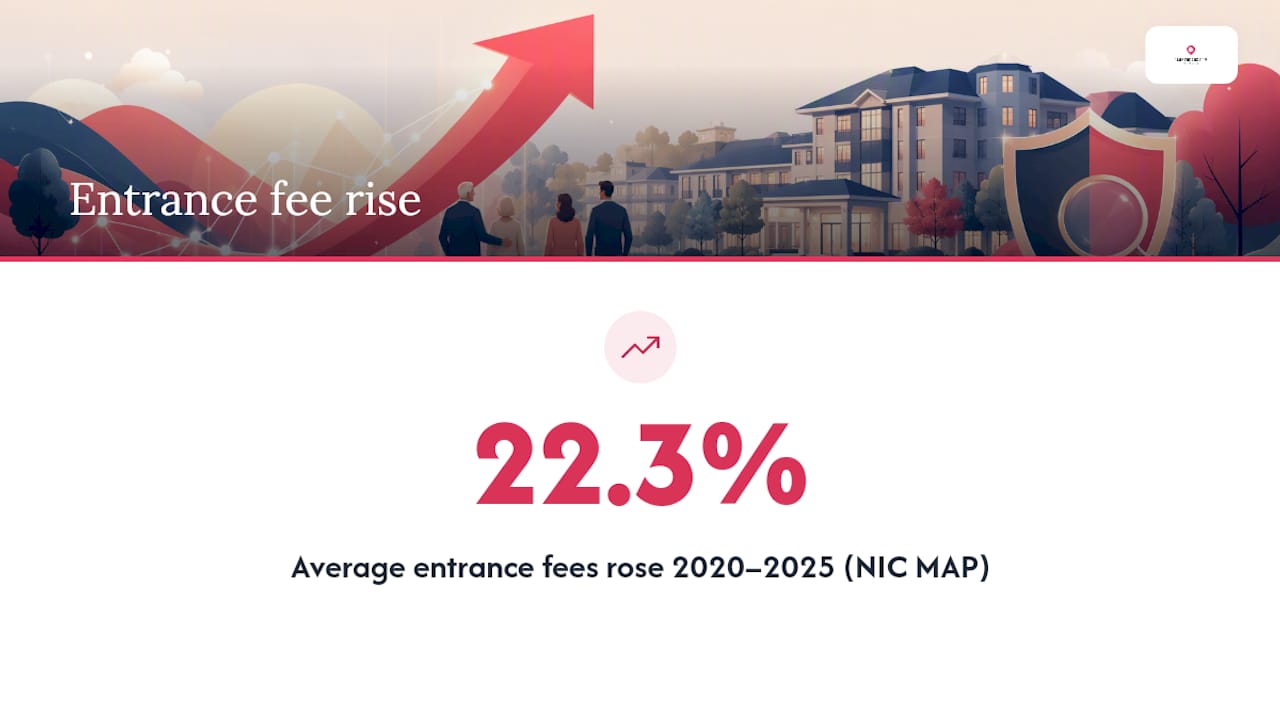
Statistic to remember: entrance fees grew about 22.3% cumulatively between 2020 and 2025, according to NIC MAP data. If you are comparing quotes gathered a few years apart, that gap alone can explain a six-figure difference.
Three variables drive most of the remaining variation: geography, unit type (studio versus two-bedroom cottage), and the amenity package. A campus with a full-service clinic, indoor pool, and on-site skilled nursing wing will price its entrance fee well above a smaller community offering independent living only.
What Are the Three CCRC Contract Types?
CCRC fee structure hinges almost entirely on which contract type a community offers, and each one shifts risk between you and the provider differently.
- Type A (lifecare): carries the highest entrance fee of the three, but locks in predictable monthly costs even if you eventually need assisted living or skilled nursing. You are essentially prepaying for future care at today's rates.
- Type B (modified): asks for a moderate entrance fee and includes a limited amount of higher-level care, often measured in days or a dollar cap, before you shift to paying market rates for anything beyond that allowance.
- Type C (fee-for-service): has the lowest entrance fee of the group, but you pay full market rates for assisted living or nursing care whenever you need it, with no discount built in.
The math plays out differently depending on how long you live in the community and how much care you eventually need. A resident who stays healthy for a decade under a Type C contract may come out ahead, having paid a smaller upfront fee and never touching higher-cost care. A resident who develops a chronic condition within a few years under Type A often comes out ahead in the other direction, since the entrance fee already covers what would otherwise be median annual skilled nursing costs near $129,575. There is no universally correct choice. It depends on family health history, risk tolerance, and how much you value cost certainty over a lower upfront number.
What Does an Entrance Fee Actually Pay For?
An entrance fee is not a home purchase. You are not buying equity, and in most contracts you have no ownership claim on the property or the right to leave it to heirs the way you would a house. The Daily Record's coverage of continuing-care costs frames it accurately: the fee buys a prepaid right of access and a bundle of future services, not a deed.
Communities typically use entrance fee revenue for three purposes: funding capital projects and building maintenance, feeding an operating reserve that keeps monthly fees stable, and in some cases backing bond obligations tied to construction financing. Refund structures vary widely by contract:
- Fully refundable plans return most or all of your fee to your estate or you, usually after the unit is re-occupied.
- Partially refundable plans return a set percentage, often 50% to 90%, under similar re-occupancy conditions.
- Declining or amortizing plans reduce the refundable portion gradually, often losing a fixed percentage each month or year until nothing remains refundable after a set period.
AARP notes that refund terms differ so much from one contract to the next that reading the fine print matters more than comparing headline entrance-fee numbers. Some states add their own layer of protection here. New York's health department requires certain minimum refund terms in approved contract forms, which gives residents in that state a regulatory floor that not every state guarantees.
Pro Tip: Ask the community for a written example of how a refund would be calculated if you moved out or passed away in year three versus year ten. If the sales team can't produce a clear number quickly, treat that as a warning sign about how the contract is actually written.
How Much Are Monthly Fees on Top of the Entrance Payment?
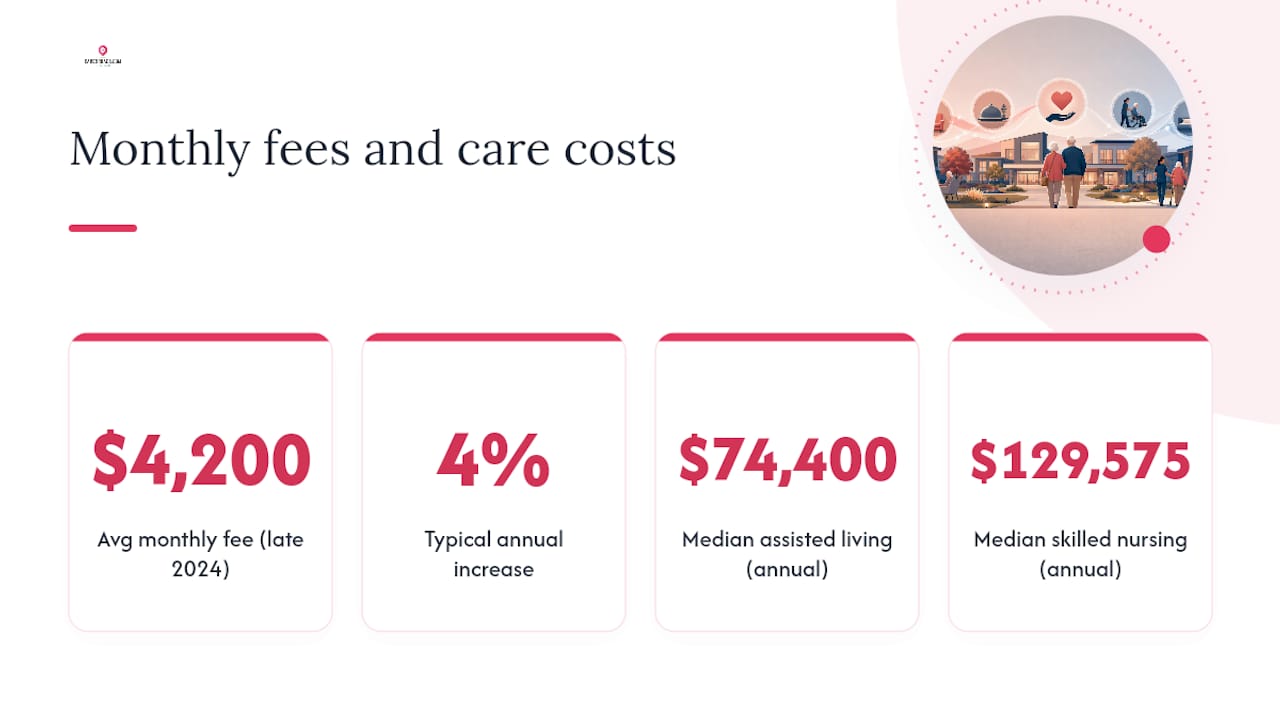
The entrance fee is only half the financial picture. Average monthly service fees for independent living reached about $4,200 in late 2024, and most communities raise that figure by roughly 4% every year to keep pace with staffing and operating costs.
Statistic to remember: a $4,200 monthly fee growing 4% annually turns into a significantly higher monthly fee within a decade, even before any care-level upgrade.
That escalation is where the lifecycle math gets interesting. If you never need assisted living or skilled nursing, an entrance-fee community can end up costing more than aging in place with home care support. But if you eventually need higher levels of care, the comparison flips. Median annual costs for assisted living run about $74,400 and skilled nursing about $129,575 outside a CCRC, and a Type A contract can absorb much of that increase without a matching jump in your monthly bill. The entrance fee, in that scenario, functions less like a purchase and more like insurance against escalating late-life care costs.
How Do You Check a Community's Financial Health Before Paying?
Financial vetting protects your entrance fee before you ever sign a contract, and it deserves the same seriousness you'd give a home purchase.
- Request audited financial statements for the community and its parent organization, not just a marketing brochure with occupancy photos.
- Review the balance sheet for unrestricted reserves relative to operating expenses. Thin reserves are one of the clearest predictors of future fee spikes or service cuts.
- Check occupancy rates over the last three to five years. A community sliding below 85% occupancy often struggles to fund promised services.
- Ask for the reserve study and deferred maintenance report. A campus with aging infrastructure and no funded plan to fix it is a liability you're inheriting.
- Read the bond disclosure documents, if the community issued municipal or corporate bonds to finance construction. Credit ratings on those bonds are a decent proxy for institutional stability.
- Verify the refund schedule, transfer rules, and fee-increase triggers in the actual contract language, not the sales summary.
Financial planning writers who cover CCRC decisions consistently recommend treating this vetting step as non-optional, since the entrance fee often represents a family's largest single asset transfer outside a home sale.
Pro Tip: Bring an elder law attorney or fee-only financial advisor into the room before you sign anything, not after. A one-time review fee is far cheaper than discovering a declining refund clause six months into residency.
If a community resists sharing audited statements or reserve studies, delay the deposit until you get them. That resistance alone tells you something about how much financial transparency to expect once you're a resident.
Can You Deduct Part of Your CCRC Entrance Fee?
Portions of both entrance and monthly fees can sometimes qualify as prepaid medical expenses for tax purposes, based on IRS private letter rulings issued to specific communities and residents. That treatment is not automatic. It depends on how the community allocates fees between housing, services, and medical care, and it requires documentation from the community plus confirmation from a qualified tax professional before you claim anything.
Most families fund entrance fees through a combination of sources:
- Proceeds from selling a longtime home
- Retirement account withdrawals, timed to manage tax brackets
- Long-term care insurance benefits, where policies allow lump-sum or reimbursement use
- Cash reserves or life insurance cash value
Timing matters. Selling a home and moving in the same tax year can create a larger taxable event than spreading the transition across two years. Ask the community for its written fee-allocation breakdown before tax season, not after, so your accountant has something concrete to work with.
Is an Entrance Fee Worth It for Your Family?
Entrance-fee communities tend to make the most sense for families who value predictable long-term care costs and want a full continuum of care on one campus, especially when there's a family history of dementia or chronic illness that makes future care needs likely. They make less sense for someone who expects to relocate within a few years, needs to preserve liquidity for other goals, or is uncomfortable holding institutional credit risk on an organization's long-term solvency. Financial fit is only half the decision. Pair every spreadsheet with an honest look at lifestyle, social fit, and health trajectory before you commit six figures to a single community.
— Care
Where Carexroads Fits Into Your Research
Once you understand what an entrance fee buys and what to check before signing, the next challenge is narrowing dozens of communities down to a shortlist worth touring. Carexroads offers a searchable directory of senior living and care providers that includes family reviews and an average satisfaction rating across verified listings.

You can use it to compare communities by location, filter by care level, and read what other families actually experienced before requesting financial documents or scheduling a tour. It won't replace the audited statements and bond disclosures you request directly from a community, but it gives you a faster, more honest starting point than a generic search engine. If your family is weighing an entrance-fee community against staying home longer with support, Carexroads' home care resource is worth reading side by side with this guide before you make a final call.
Sources
- CCRC performance: 3Q 2025 five-year trends in CCRC entrance fees
- Continuing Care Retirement Communities: What They Cost, How They Work, and When to Start Preparing | Retirement CFO
- Continuing care retirement communities | AARP
This article is general information, not a substitute for advice from a qualified financial advisor. Consult a qualified financial professional about your own circumstances before acting on anything here.
FAQ
What is the average entrance fee for a CCRC?
The national average sits near $400,000 to $480,000, though industry data shows a real range from about $40,000 to $2 million depending on contract type, unit size, and location.
Which CCRCs are considered the best in the country?
There's no single official ranking; the strongest communities are the ones with strong audited financials, low deferred maintenance, and verified family reviews. Carexroads' directory is a good place to start comparing communities by real family feedback rather than marketing claims alone.
Can I deduct the CCRC entry fee on my taxes?
Sometimes, in part. The IRS has allowed portions of entrance and monthly fees to qualify as prepaid medical expenses in certain private letter rulings, but this depends on the community's fee allocation and requires confirmation from a tax professional.
What is the best age to enter a CCRC?
Most residents move in at an age when they are still healthy enough to qualify medically and young enough to enjoy the independent living years before needing higher levels of care. Waiting too long can limit which contract types and communities remain open to new applicants.