

Subacute rehabilitation is defined as short-term, medically managed inpatient care for patients who are medically stable but still need multidisciplinary therapy and skilled nursing support before returning home. The industry standard term is "subacute rehab," and it sits between hospital-level acute care and full independence at home. It typically involves less than 3 hours of therapy per day, delivered by physical therapists, occupational therapists, and speech therapists working alongside skilled nurses. Medicare recognizes subacute rehab as a covered level of care within skilled nursing facilities when specific eligibility criteria are met. For families watching a parent or spouse leave the hospital, understanding what subacute rehabilitation is and how it works is the first step toward making a confident care decision.
What therapies and medical services does subacute rehab offer?
Subacute rehabilitation delivers a coordinated mix of therapy and skilled nursing services, all under one roof. The goal is to restore as much functional independence as possible before the patient returns home.
The three core therapies are:
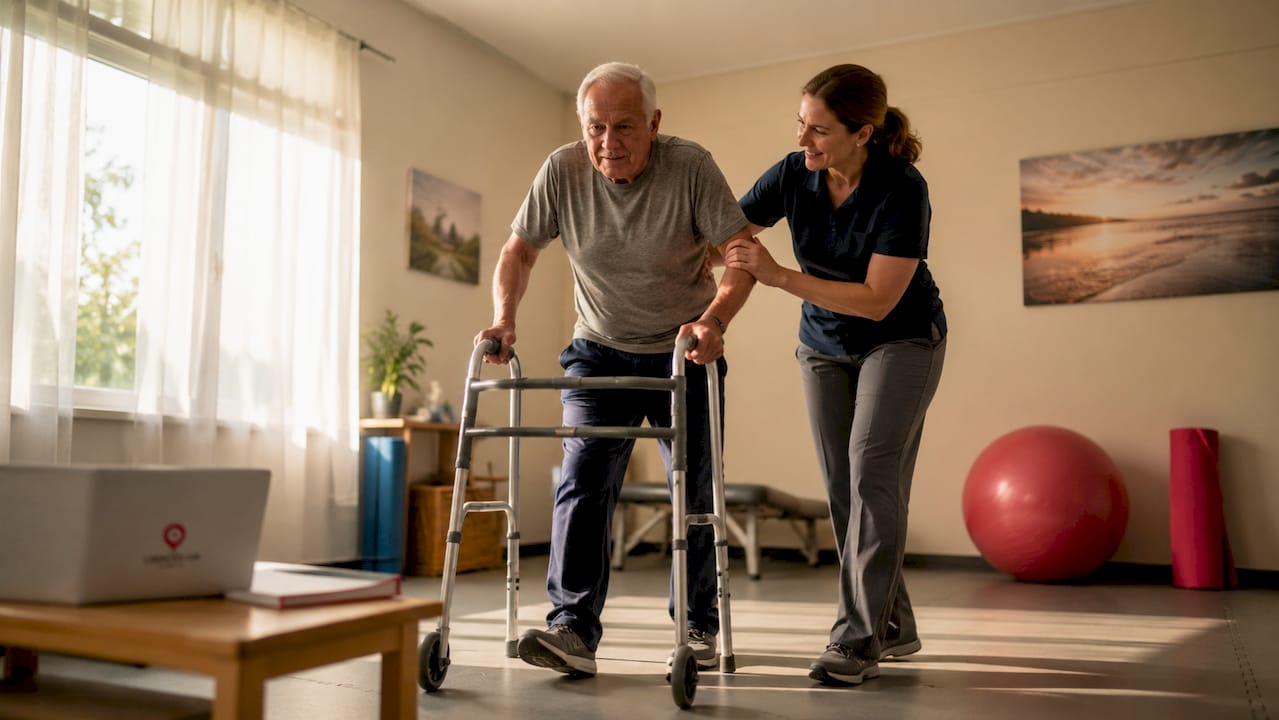
- Physical therapy (PT): Rebuilds strength, balance, and mobility. A therapist works with the patient on walking, transferring from bed to chair, and stair climbing.
- Occupational therapy (OT): Focuses on activities of daily living, or ADLs. This includes dressing, bathing, grooming, and safely using the kitchen.
- Speech therapy: Addresses swallowing difficulties, communication problems, and cognitive changes that often follow a stroke or neurological event.
Patients in subacute care receive 1–2 hours of active therapy per day, five to seven days a week. That schedule is less intense than acute inpatient rehab, which makes it appropriate for seniors who fatigue quickly or have multiple medical conditions.
Skilled nursing services run alongside therapy around the clock. These include wound care, medication management, respiratory support, and IV therapy and monitoring. Continuous clinical oversight is what separates subacute rehab from outpatient therapy or home health visits, where a nurse is not present 24 hours a day.
Pro Tip: Ask the facility how often the therapy team and nursing staff formally communicate. Facilities with daily interdisciplinary team meetings tend to catch complications earlier and adjust care plans faster.
How does subacute rehab differ from acute rehab and long-term skilled nursing?
Families often confuse three distinct levels of post-acute care: acute inpatient rehabilitation, subacute rehabilitation, and long-term skilled nursing. Each serves a different patient profile and recovery goal.
Acute rehab requires 3 or more hours of therapy daily and is designed for patients who can tolerate high-intensity treatment. Subacute rehab serves patients who are medically stable but not yet strong enough for that pace. Long-term skilled nursing focuses on maintenance care rather than active recovery, often for patients with chronic conditions who will not return to independent living.
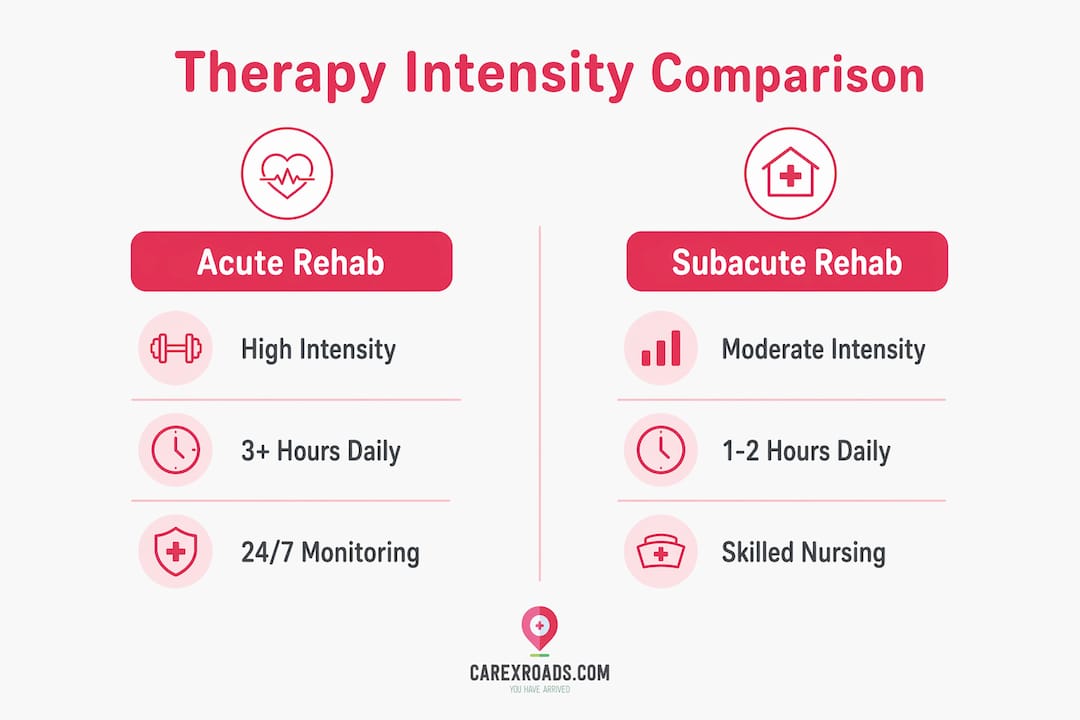
The table below organizes the key differences:
| Feature | Acute inpatient rehab | Subacute rehabilitation | Long-term skilled nursing |
|---|---|---|---|
| Therapy intensity | 3+ hours daily | 1–2 hours daily | Minimal or maintenance only |
| Patient condition | Medically complex, high function | Medically stable, moderate need | Chronic, ongoing medical needs |
| Primary goal | Rapid functional recovery | Goal-oriented return to home | Long-term care and safety |
| Typical setting | Hospital-based rehab unit | Skilled nursing facility (SNF) | Skilled nursing facility (SNF) |
| Typical stay length | 2–3 weeks | 2–8 weeks | Months to years |
The goal of subacute rehab is temporary and goal-oriented recovery, not long-term custodial care. That distinction matters when families are weighing options after a hospitalization. Choosing the wrong level of care can slow recovery or create unnecessary costs.
What can families expect during the subacute rehabilitation process?
A typical subacute rehab stay runs 2–8 weeks, with length determined by the patient's progress and discharge goals. The pace feels deliberate rather than rushed, which is reassuring for families worried about a parent being pushed too hard too soon.
The process generally unfolds in four stages:
- Initial assessment (days 1–3): The therapy and nursing team evaluates strength, cognition, swallowing, mobility, and medication needs. This assessment shapes the individualized care plan.
- Active therapy phase (weeks 1–3): Daily therapy sessions focus on functional tasks. A patient recovering from hip replacement will practice walking, getting in and out of a car, and climbing steps.
- Clinical review point (around day 8): The rehab team formally reassesses recovery trajectory. This is a critical communication opportunity for families to ask about progress, barriers, and updated discharge timelines.
- Discharge planning (week 2 onward): Home environment assessments begin early. The team evaluates whether grab bars, a hospital bed, or a wheelchair ramp are needed before the patient returns home.
Early family involvement improves outcomes by facilitating communication and preparing caregivers for the transition home. Families who attend care conferences and observe therapy sessions help the team plan a safer discharge.
Pro Tip: Attend at least one therapy session per week. Watching your loved one practice transfers or walking gives you the skills to assist safely at home and signals to the care team that you are an active partner in recovery.
What are the main benefits of subacute rehabilitation for seniors?
Subacute rehab delivers measurable benefits that go beyond simply filling time between hospital and home. For seniors recovering from surgery, stroke, or a serious illness, the structure and clinical support it provides are often what make the difference between a full recovery and a setback.
Key benefits include:
- Improved functional independence: Multidisciplinary rehabilitation in subacute settings improves functional independence and reduces hospital readmissions among seniors. Coordinated therapy and nursing interventions produce better outcomes than isolated or unstructured care.
- Reduced readmission risk: Continuous clinical monitoring catches complications like infections, blood clots, or medication reactions before they escalate into emergencies.
- 24/7 skilled nursing oversight: Patients have access to licensed nurses at any hour. This level of supervision is not available in home health or outpatient settings.
- Medicare coverage support: Medicare covers up to 100 days of skilled nursing facility care, including subacute rehab, when a qualifying hospital stay and medical necessity criteria are met. Families should verify eligibility early in the hospital stay.
- Caregiver education and support: Therapists train family members in safe assist techniques, fall prevention, and home exercise programs before discharge.
- Emotional reassurance: Patients benefit from daily human contact, structured routine, and professional encouragement during a vulnerable period of recovery.
Families should also recognize that subacute rehab reduces the burden on home caregivers. A parent who leaves the hospital able to dress independently and walk safely puts far less strain on family members than one who requires full assistance for every task. For families researching facility selection in specific regions, Carexroads offers verified provider guides that simplify that process.
Key Takeaways
Subacute rehabilitation is the most effective post-hospital recovery option for medically stable seniors who need structured therapy, skilled nursing, and coordinated discharge planning before returning home.
| Point | Details |
|---|---|
| Clear definition | Subacute rehab is short-term inpatient care with less than 3 hours of therapy daily for medically stable patients. |
| Therapy scope | Physical, occupational, and speech therapy run 1–2 hours daily, five to seven days per week. |
| Key distinction | Subacute rehab differs from acute rehab in therapy intensity and from long-term nursing in its goal of returning patients home. |
| Family involvement | Attending care conferences and therapy sessions improves discharge safety and caregiver readiness. |
| Medicare coverage | Medicare may cover up to 100 days in a skilled nursing facility when eligibility and medical necessity criteria are satisfied. |
What I've learned from watching families navigate subacute rehab decisions
The families who fare best in this process are the ones who ask hard questions early. They do not wait for the hospital discharge planner to come to them. They walk into that conversation with a list: What level of therapy does my parent actually need? Does this facility have the nursing staff to manage their specific conditions? What does the day-8 review look like, and who will call me?
The most common mistake I see is families assuming that any skilled nursing facility offering rehab is equivalent to a purpose-built subacute program. The therapy intensity, staff-to-patient ratios, and interdisciplinary communication practices vary widely. A facility that offers physical therapy three times a week is not the same as one running coordinated PT, OT, and speech therapy five to seven days a week with daily team huddles.
Families also underestimate how much the emotional environment matters. A senior who feels safe, respected, and heard in a facility recovers faster. That is not sentiment. Clinical literature on patient-centered care consistently links psychological safety to better functional outcomes. When you tour a facility, watch how staff interact with current residents. That tells you more than any brochure.
Consulting a discharge planner early in the hospitalization is the single most practical step a family can take. Do not let the discharge happen to you. Get ahead of it.
— Care
How Carexroads helps families find the right subacute care
Choosing a subacute rehab facility under time pressure is one of the hardest decisions a family faces. Carexroads was built specifically to reduce that pressure.

Carexroads provides verified provider listings, real family reviews, and practical guides covering hospital-to-home transitions, Medicare coverage questions, and facility evaluation checklists. The site holds a 4.8 average family satisfaction rating because it focuses on real insights rather than generic directories. Whether your family is comparing skilled nursing facilities in a specific city or trying to understand what questions to ask a discharge planner, Carexroads senior care resources give you a clear starting point. For families also thinking ahead to longer-term options, the guide on transitioning a senior to assisted living offers practical next steps after rehab concludes.
FAQ
What is the subacute care definition in simple terms?
Subacute care is short-term inpatient care for patients who are medically stable but still need daily therapy and skilled nursing before going home. It sits between hospital-level acute care and independent living or home health.
Who needs subacute rehabilitation?
Seniors recovering from hip or knee replacement, stroke, cardiac events, or serious infections are the most common candidates. Patients qualify when they no longer need acute hospital care but cannot safely manage at home without structured support.
How does subacute rehab differ from skilled nursing?
Subacute rehab focuses on active, goal-oriented recovery with daily therapy sessions aimed at returning the patient home. Long-term skilled nursing focuses on ongoing maintenance care for patients with chronic conditions who require continuous medical supervision.
Does Medicare pay for subacute rehabilitation?
Medicare covers up to 100 days of skilled nursing facility care, which includes subacute rehab, when the patient has had a qualifying hospital stay of at least three days and meets medical necessity criteria. Families should confirm eligibility with the hospital's billing team before discharge.
How long does a typical subacute rehab stay last?
Most subacute rehab stays run 2–8 weeks, depending on the patient's diagnosis, functional progress, and discharge goals. The care team reassesses the plan regularly and adjusts the timeline based on clinical milestones.