
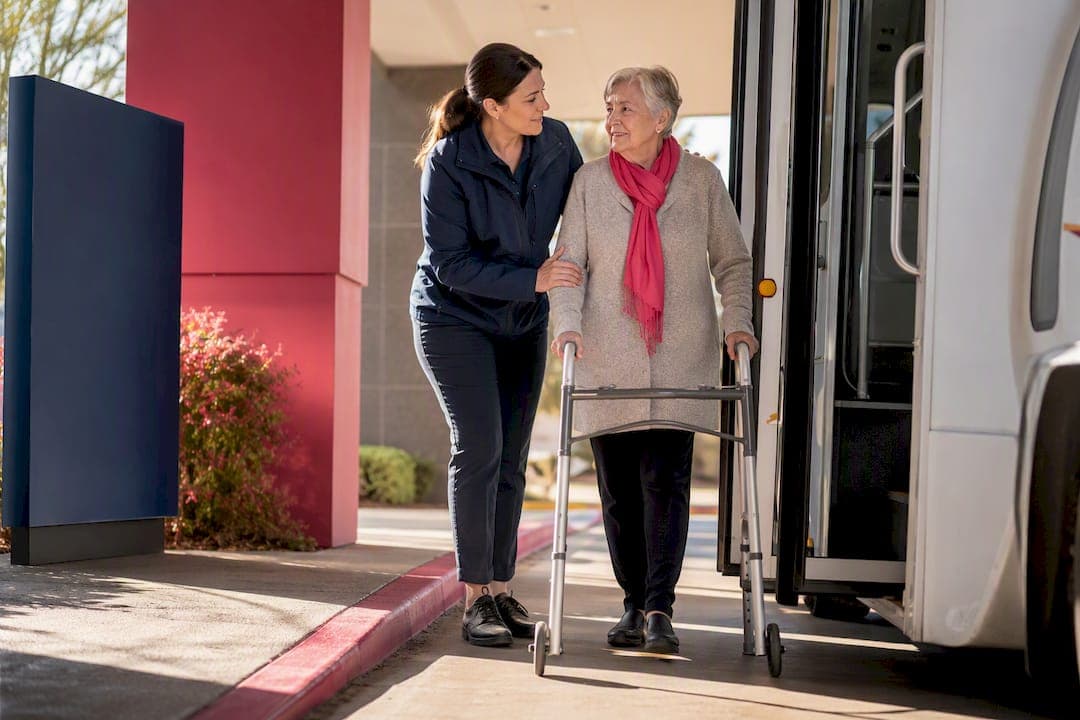
Seniors generally have several common options for getting around such as public transit, paratransit, non-emergency medical transportation (NEMT), volunteer driver programs, and ride-hailing or private senior transport. The fastest way to secure a ride is to call your local Area Agency on Aging, dial 2-1-1, or search the Eldercare Locator by ZIP code today, not the week an appointment is scheduled. Ask about Medicaid or insurer NEMT benefits while you're at it.
TL;DR:
- Most transportation programs require reservations 2 to 5 days in advance, so early booking is essential to prevent missed medical appointments.
- Medicaid-funded NEMT covers trips only for medical care such as dialysis and physical therapy, excluding social outings or grocery runs.
- Paratransit services and volunteer driver programs have limited availability and often require eligibility proof and prior planning.
- Drivers for licensed services are typically trained and insured, but volunteer and ride-hailing services may lack proper training or insurance coverage for mobility assistance.
- Registering for transportation services proactively and keeping confirmation details helps avoid delays and ensures timely pickups.
Table of Contents
- Transportation Options for Elderly Adults, Compared
- How to Find Senior Transportation Services Near You
- NEMT Funding: Who Actually Pays for the Ride
- A Planning Checklist That Prevents Missed Appointments
- Why Coordination Matters More Than the Ride Itself
- Who's Liable if Something Goes Wrong on the Ride
- Register Before You Need To, Not After
- Find Vetted Transportation and Care Resources With Carexroads
- Sources
Transportation Options for Elderly Adults, Compared
Every option trades off cost, convenience, and accessibility differently, and the right choice usually depends on where your loved one is going and how much help they need getting there.
Public transit costs the least, often with a discounted senior fare, and runs on fixed routes and schedules. It works well for people who can walk to a stop and climb aboard without assistance. The catch is reliability. The ADA requires buses and trains to be accessible, but a broken lift or an out-of-service elevator can strand a rider with no warning, so it's worth calling ahead if a mobility device is involved.
Paratransit is the curb-to-curb service transit agencies must offer as an ADA companion to fixed-route buses. Riders typically need to apply and prove eligibility, and service only runs where and when the regular bus or train does. Same-day requests are rare. Most agencies want reservations made a day or more in advance.
NEMT covers rides to medical appointments and is usually funded through Medicaid or, sometimes, a private insurer. It's brokered through a state or regional coordinator rather than booked directly, and wheelchair-accessible vehicles are often available for riders who need them.
Volunteer driver programs, frequently run through senior centers or faith-based groups, tend to be free or low-cost and pair riders with the same familiar driver over time. The tradeoff is availability. These programs run on volunteers, so slots can fill up fast, especially in rural areas.
Ride-hailing, taxis, and private senior transport services offer the most flexibility. You can book a ride in minutes, but the cost adds up quickly for regular trips, and not every vehicle on these platforms accommodates a wheelchair or walker.
Microtransit and community shuttles split the difference. These app-based or phone-dispatched shuttles serve a defined zone at a lower cost than a private ride, and more transit agencies are rolling them out as a bridge between fixed routes and paratransit.
How to Find Senior Transportation Services Near You
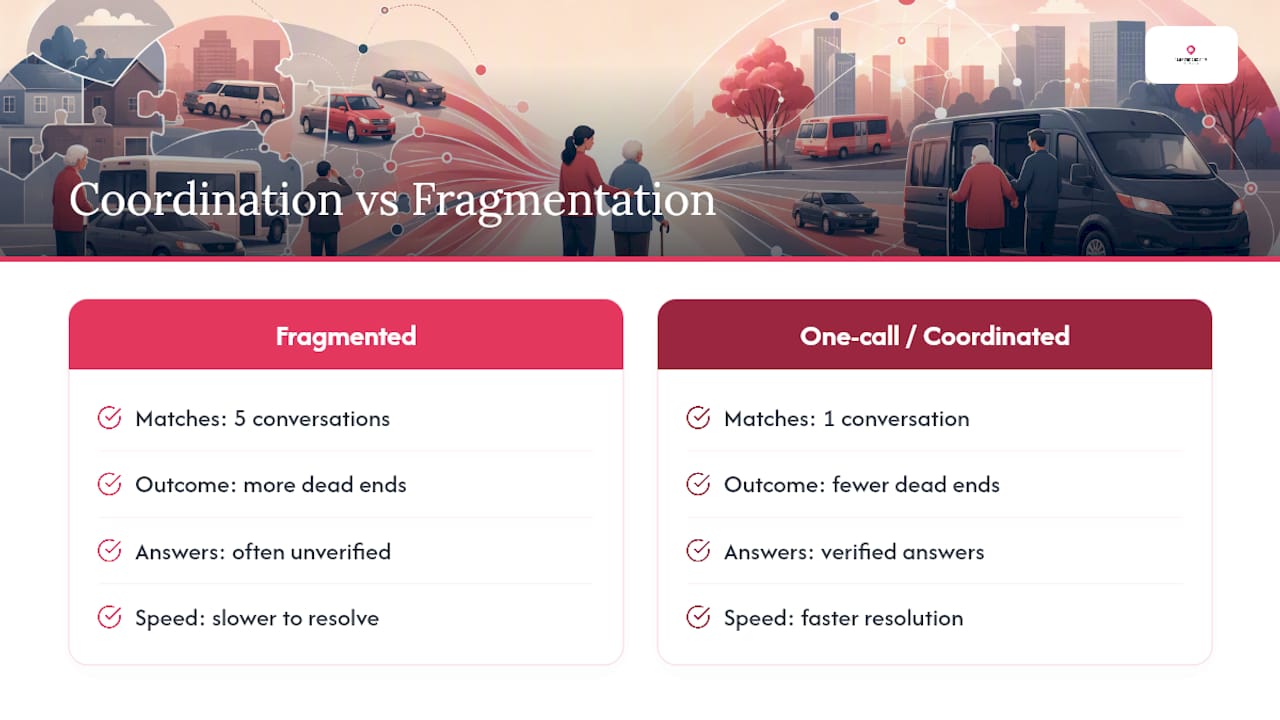
Start with a mobility manager if your area has one. These coordinators, often based inside an Area Agency on Aging, work under a "one-call, one-click" model that matches riders to the right program instead of making caregivers cold-call five agencies themselves.
- Call your local Area Agency on Aging directly. Most maintain a current list of transit, paratransit, and volunteer programs in the county.
- Contact the Eldercare Locator at 800-677-1116 or dial 2-1-1 to be connected with regional services by ZIP code.
- Check the transit agency's own website for paratransit applications and eligibility rules.
- Ask senior centers and local churches or synagogues about volunteer driver programs, which rarely advertise widely.
Before you call any of these, have a few things on hand: the rider's name and address, the type of mobility aid they use (cane, walker, wheelchair), the appointment date and time, and any Medicaid or insurance information. Agencies move faster when you can answer their questions on the first call instead of a callback later.
NEMT Funding: Who Actually Pays for the Ride
NEMT covers exactly what its name suggests: transportation to dialysis, physical therapy, specialist visits, and other medical care that isn't an emergency. It is not for grocery runs or social outings.
- Medicaid is the largest funder of NEMT nationally, and most states route these trips through a broker rather than letting riders book a ride directly.
- The Federal Transit Administration's CCAM initiative coordinates federal programs, including Section 5310 grants, that help local agencies fund senior and disability transportation.
- Some Medicare Advantage plans and private insurers now include a limited number of NEMT rides as a member benefit, so it's worth calling to ask.
Federal dollars through programs like FTA's Rides to Wellness have seeded door-to-door medical transport pilots in communities that previously had none, which is part of why availability varies so much from one county to the next.
A Planning Checklist That Prevents Missed Appointments
Booking windows are the single biggest reason rides fall through. Many programs require reservations 2 to 5 business days ahead and cap the number of trips per week, according to scheduling guidelines used by county senior ride programs. If a loved one has a standing dialysis or therapy schedule, book the whole month at once rather than calling trip by trip.
Before pickup day, gather:
- A current medication list in case of a delay or transfer between vehicles
- Mobility equipment folded or ready, with any straps or brakes checked beforehand
- An emergency contact number and the reservation confirmation number
- Confirmation of whether a companion can ride along, since policies vary by program
When you call to book, ask whether the driver provides door-to-door assistance or only curb service, and whether the vehicle has a ramp or lift if one is needed.
Pro Tip: Save the confirmation text or email from every ride you book. Drivers sometimes run behind schedule, and having the reservation number ready speeds up any call to dispatch.
Why Coordination Matters More Than the Ride Itself
Fragmented services, not a lack of options, is usually what strands seniors. A mobility manager or one-call system can match a rider to the right program in a single conversation instead of five. Carexroads built its directory and guides, backed by a 4.8 family satisfaction rating, around that same idea: fewer dead ends, more verified answers, faster.
Who's Liable if Something Goes Wrong on the Ride
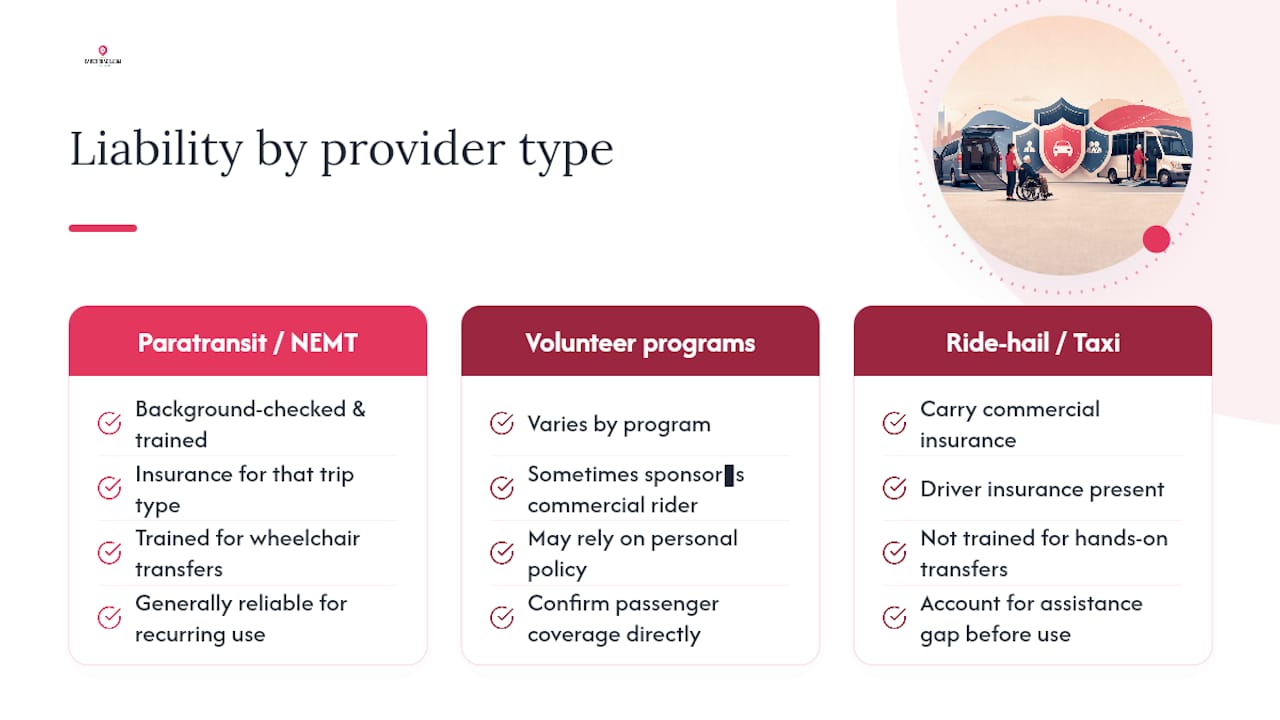
Liability in senior transportation comes down to two questions: was the driver qualified, and was the vehicle insured for that type of trip? Paratransit and NEMT drivers working through a licensed broker or transit agency typically undergo background checks and specific training for securing wheelchairs and assisting riders with limited mobility. That training is part of what you're paying for, even when the ride itself is free or low-cost.
Volunteer driver programs vary more widely. Some carry commercial insurance riders through the sponsoring nonprofit; others rely on the volunteer's personal auto policy, which may not cover a paid or reimbursed trip the same way. Ask directly whether the program's insurance covers passengers, not just the vehicle.
Ride-hailing and taxi services carry their own commercial insurance, but drivers on these platforms generally aren't trained to help someone transfer from a wheelchair or steady a walker on uneven pavement. If your loved one needs hands-on assistance getting in or out of a vehicle, that's a real gap to account for, not a minor inconvenience.
Before committing to any recurring service, ask two questions: is the driver background-checked and trained for mobility assistance, and does the program's insurance explicitly cover the passenger during transit. A program that can't answer both clearly is one worth reconsidering.
Register Before You Need To, Not After
The biggest mistake families make is waiting for a crisis, assuming a same-day ride will be there when it isn't. Register for paratransit and NEMT now, and keep eligibility documents and contact numbers on hand.
— Care
Find Vetted Transportation and Care Resources With Carexroads
Once you know which type of ride fits your situation, the next challenge is finding a provider you can actually trust in your area, and that's where a searchable directory beats a stack of phone numbers. Carexroads lets you search local senior care and support providers by location, read verified reviews from real families, and pull up practical guides on everything from transitioning to assisted living to coordinating care after a move.
Transportation rarely exists in isolation. It's tied to where a senior lives, how close family is, and what other support they need day to day, which is why Carexroads also covers home care, adult day programs, and moving a parent closer to family when proximity becomes the real fix. Visit Carexroads to search verified providers near you and get a clearer picture of what's actually available before the next appointment sneaks up on you.
Sources
- Non-emergency medical transportation | Federal Transit Administration (FTA) / CCAM
- Senior Rides scheduling and rules | St. Mary's County Department of Aging