

Live-in caregiver cost typically runs $4,500 to $12,000 or more a month, depending on care level, location, and whether you hire through an agency or privately. As a rule of thumb, once a loved one needs more than 12 to 14 hours of daily assistance, live-in care usually costs less than paying for equivalent hourly shifts.
TL;DR:
- Live-in caregiver costs typically range from $4,500 to $12,000 per month, with higher expenses in high-cost regions like the Northeast and West Coast.
- Rates are usually quoted as flat daily or weekly fees, not hourly, which can be misleading when estimating active care hours versus sleep time.
- Costs vary based on caregiver skill level, agency markup, room and board benefits, payroll taxes, and additional expenses like supplies or training.
- Funding options include Medicaid HCBS waivers, VA Aid & Attendance, long-term care insurance, and HSAs, but most families combine multiple sources.
- For cost-effective care, consider both the level of needed assistance and the risks of private hire versus agency services, and always obtain detailed, written contracts.
Table of Contents
- What Is the Live-In Home Care Cost in 2026?
- How Does Live-In Care Work, and What Types of Caregivers Are Available?
- What Drives the Cost of a Live-In Caregiver Up or Down?
- How Can You Pay for Live-In Caregiver Costs?
- How Do You Estimate Your Own Live-In Care Cost?
- What Should Be in Your Live-In Caregiver Contract?
- How Carexroads Helps You Compare Live-In Care Costs
- How Long Does a Typical Live-In Caregiver Arrangement Last?
- What Hidden Fees and Unexpected Expenses Should You Budget For?
- How Does Live-In Care Compare to Assisted Living or Adult Day Care?
- Balancing Safety, Independence, and Budget
- Ready to Compare Verified Live-In Care Providers?
- Sources
What Is the Live-In Home Care Cost in 2026?
Live-in caregiver rates vary more than most families expect, and the gap comes down to two things: where you live and how much hands-on assistance your loved one needs. On a national basis, live-in care generally falls between $150 and $400 per day, which translates to roughly $4,500 to $12,000 a month. Families in high-need situations, especially those requiring a skilled aide or nurse, often see monthly totals push past that range.
Regional variation is significant. The Northeast and West Coast, particularly the Boston, New York, San Francisco, and Seattle metro areas, tend to run at the higher end of that scale because caregiver wages and cost of living both run hot in those markets. Rural areas often cost less than nearby metros, but availability can be thinner, which sometimes pushes families toward agencies simply because there are fewer private caregivers to choose from locally.
Here's where the math gets tricky. Live-in rates are usually quoted as a flat daily or weekly rate, not an hourly one, because a live-in caregiver isn't paid for 24 straight hours of active work. Federal wage rules recognize that live-in employees get sleep and meal breaks, so the "hourly equivalent" of a live-in rate often looks deceptively low when you divide the daily fee by 24. That's misleading. A live-in caregiver providing 10 to 12 hours of active care plus overnight availability is not comparable, dollar for dollar, to hiring a 24-hour shift-based aide.
A few numbers worth anchoring on:
- Daily live-in rates: roughly $150 to $400
- Weekly live-in rates: roughly $1,050 to $2,800
- Monthly live-in rates: roughly $4,500 to $12,000+
Quick fact: by 2030, every Baby Boomer will be 65 or older, a demographic shift already tightening the supply of caregivers in high-demand metro areas and putting upward pressure on rates.
How Does Live-In Care Work, and What Types of Caregivers Are Available?
A live-in caregiver arrangement means the caregiver resides in the home, typically working extended daytime hours with a scheduled overnight sleep period, rather than rotating in and out on fixed shifts. This differs from 24/7 shift-based care, where two or three caregivers split the day so someone is always awake and actively monitoring.
The type of caregiver you hire changes both the scope of care and the cost:
- Non-medical companion caregivers handle household tasks, meal prep, transportation, and social engagement. They're the most affordable option.
- Personal care aides or certified nursing assistants (CNAs) add hands-on help with bathing, dressing, mobility, and toileting, and cost more due to training requirements.
- LPN or RN live-in caregivers manage medication administration, wound care, or chronic condition monitoring. These arrangements cost significantly more and are less common as true "live-in" setups, since licensed nurses typically work shifts rather than residing full-time.
If your loved one needs someone awake and alert overnight, whether due to fall risk, wandering, or unstable medical needs, you likely need awake overnight coverage instead of a standard live-in sleep arrangement. That usually means a second caregiver, which changes the cost structure substantially.
What Drives the Cost of a Live-In Caregiver Up or Down?
Every live-in care quote is built from a handful of line items, and understanding them helps you spot where you have room to negotiate and where you don't.
- Care level and required skills: A companion caregiver costs less than a CNA, who costs less than an LPN. Dementia care, mobility transfers, and wound care all add a premium.
- Agency markup: Agencies typically charge 20 to 40% more than private hire because that fee covers background screening, liability insurance, payroll processing, and a backup caregiver if yours calls in sick.
- Room and board: Live-in caregivers usually receive a private room and meals as part of their compensation. This can reduce their cash wage but should never be treated as a way to avoid paying at least minimum wage for actual working hours.
- Payroll taxes: If you hire privately, you become a household employer. That means Social Security, Medicare, and unemployment tax obligations, which IRS Publication 502 and related guidance can help you understand.
- Onboarding and extras: Background checks, training, mileage reimbursement, and supplies (gloves, transfer equipment) add up faster than families expect.
Quick fact: agency-hired live-in caregivers typically run 20 to 40% higher than private hires, largely because of the insurance and backup staffing built into that fee.
Pro Tip: Ask any agency for an itemized quote that separates caregiver wages from the agency fee. If they won't break it down, that's a signal to keep shopping.
How Can You Pay for Live-In Caregiver Costs?
Most families cobble together funding from multiple sources rather than relying on one program to cover the whole cost. Here's what's actually available.
- Medicare covers short-term, intermittent skilled home health services, like nursing visits or physical therapy after a hospital stay. It generally does not pay for ongoing, non-medical live-in caregiver costs.
- Medicaid offers Home and Community-Based Services (HCBS) waivers that can cover in-home personal care for eligible individuals, but rules, income limits, and waiting lists vary enormously by state. Check your state Medicaid office directly.
- VA Aid & Attendance benefits can help eligible veterans and surviving spouses offset in-home care costs, including personal care assistance.
- Long-term care insurance policies often include daily or monthly benefit caps that haven't kept pace with rising care costs, so check your policy's actual payout limit against today's rates. For insights on evolving industry challenges, see Long-Term Care Insurance Under Pressure. The long-term care insurance market has faced real strain in recent years, which is worth understanding before you count on a policy to cover the full bill.
- HSAs can sometimes reimburse qualified medical caregiving expenses, and IRS guidance clarifies which costs qualify.
How Do You Estimate Your Own Live-In Care Cost?
The ACL's guidance on estimating care hours is a useful starting point before you run any numbers, since your monthly total depends entirely on how many hours of assistance your loved one actually needs each day.
- Part-time hourly care. If your parent needs 4 hours a day, 7 days a week, at $28 to $35 an hour, that's roughly $3,300 to $4,200 a month. This is often the cheaper option below the crossover point.
- The crossover zone (12 to 14 hours a day). At this range, hourly costs start approaching $10,000 to $14,000 a month, while a live-in arrangement covering the same daytime hours plus overnight presence often runs $6,000 to $9,000. This is where live-in care typically becomes the more economical option.
- 24/7 awake care. If your loved one needs someone alert around the clock, you need multiple caregivers rotating shifts, not a single live-in employee. Three 8-hour shifts at $30 an hour easily exceeds $15,000 a month.
That buffer accounts for the hidden costs most families underestimate on their first quote.
What Should Be in Your Live-In Caregiver Contract?
A written agreement protects both you and your caregiver, and it's the single most overlooked step in private hiring.
- Scope of work: List every task explicitly, from bathing assistance to meal prep to medication reminders.
- Pay schedule and sleep policy: Specify hourly or daily rate, overtime rules, and exactly what counts as sleep time versus paid working time.
- Termination and backup plan: Define notice periods and who covers care if your caregiver is sick or quits.
- Payroll setup: Decide whether you'll run payroll yourself, use a payroll service, or hire through an agency that handles it for you.
Vetting matters just as much as the paperwork. Confirm identity, run a background check, call at least two references, and test competency on tasks like transfers or medication reminders before the first day. If your loved one has dementia, ask specifically about dementia care training.
Pro Tip: Watch for red flags like a caregiver who refuses a written contract, asks to be paid in cash only, or is vague about references. Those are the arrangements most likely to fall apart at the worst possible moment.
How Carexroads Helps You Compare Live-In Care Costs
The platform maintains an average family satisfaction rating built on verified reviews from families who've actually hired the providers listed. That matters because pricing pages rarely tell you whether a provider showed up reliably or handled a crisis well. The platform pairs cost information with real family experiences so you're comparing more than just a quoted rate. For deeper reading on related decisions, the 24-hour home care cost breakdown and the home care hiring checklist both walk through comparison steps in more detail.
How Long Does a Typical Live-In Caregiver Arrangement Last?
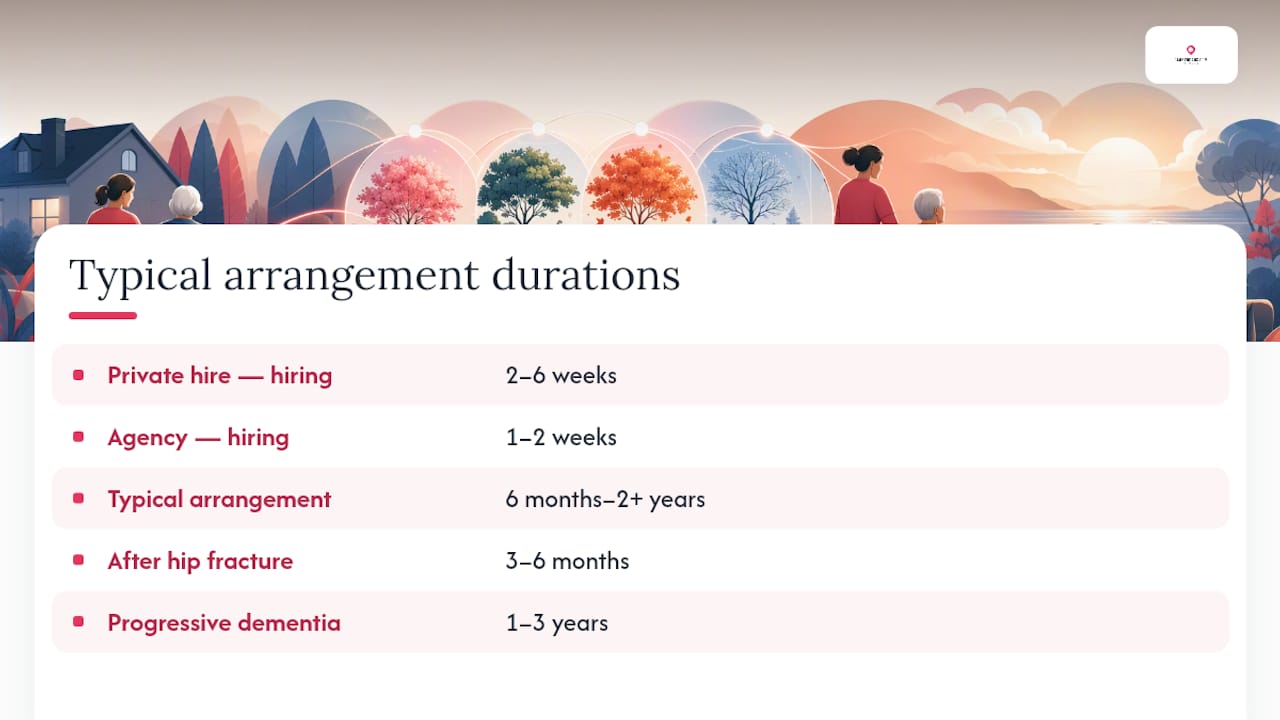
Live-in caregiver arrangements rarely follow a fixed timeline, but a general pattern holds across most families. The hiring phase, from first contact to first day of care, usually takes two to six weeks for private hire and one to two weeks through an agency, since agencies already maintain a vetted caregiver pool.
Once care begins, most arrangements last anywhere from six months to two or more years, depending on how the underlying condition progresses. A caregiver hired after a hip fracture might serve for three to six months during recovery, then transition out as independence returns. A caregiver supporting someone with a progressive condition like dementia often stays on for one to three years, with care needs escalating gradually until the family reassesses whether live-in care still meets safety needs.
Turnover happens for reasons beyond the care recipient's health. Caregivers leave for personal reasons, family relocations, or better-paying opportunities, and private hires see higher turnover than agency placements because there's no built-in backup system. Families should expect to revisit the arrangement every 3 to 6 months, checking whether the care level still matches actual needs and whether the caregiver relationship is holding up. Many arrangements end not because care failed, but because the person's needs outgrew what live-in care alone can safely provide, at which point families often transition toward a nursing facility or hospice care.
What Hidden Fees and Unexpected Expenses Should You Budget For?
The quoted daily or monthly rate is rarely the full bill. Families consistently underestimate three categories of cost.
Taxes and payroll administration top the list for private hires. As a household employer, you owe Social Security, Medicare, and often state unemployment tax, and mishandling this can trigger penalties. A payroll service typically costs $40 to $100 a month but saves significant headaches, and IRS Publication 502 outlines which caregiving costs may be deductible.
Agency add-ons show up in fine print: holiday pay premiums, replacement caregiver fees during vacations, and mileage reimbursement for errands or appointments. Ask upfront whether these are included in the quoted rate or billed separately.
Supplies and incidentals add up quietly. Incontinence supplies, transfer equipment, specialized nutrition, and home modifications like grab bars or ramps often run $100 to $300 a month and are almost never included in a caregiver quote. Community resources like Meals on Wheels can offset food costs for qualifying seniors, which is worth checking before you assume you need to add meal prep to the caregiver's paid hours.
How Does Live-In Care Compare to Assisted Living or Adult Day Care?
Live-in care isn't the only path, and it isn't always the cheapest one. Assisted living communities typically charge $4,000 to $7,000 a month for a private room, meals, and shared staff coverage, which can undercut live-in care for individuals with lower acuity needs who don't require one-on-one attention. The tradeoff is losing the home environment and the personalized, one-on-one relationship a live-in caregiver provides.
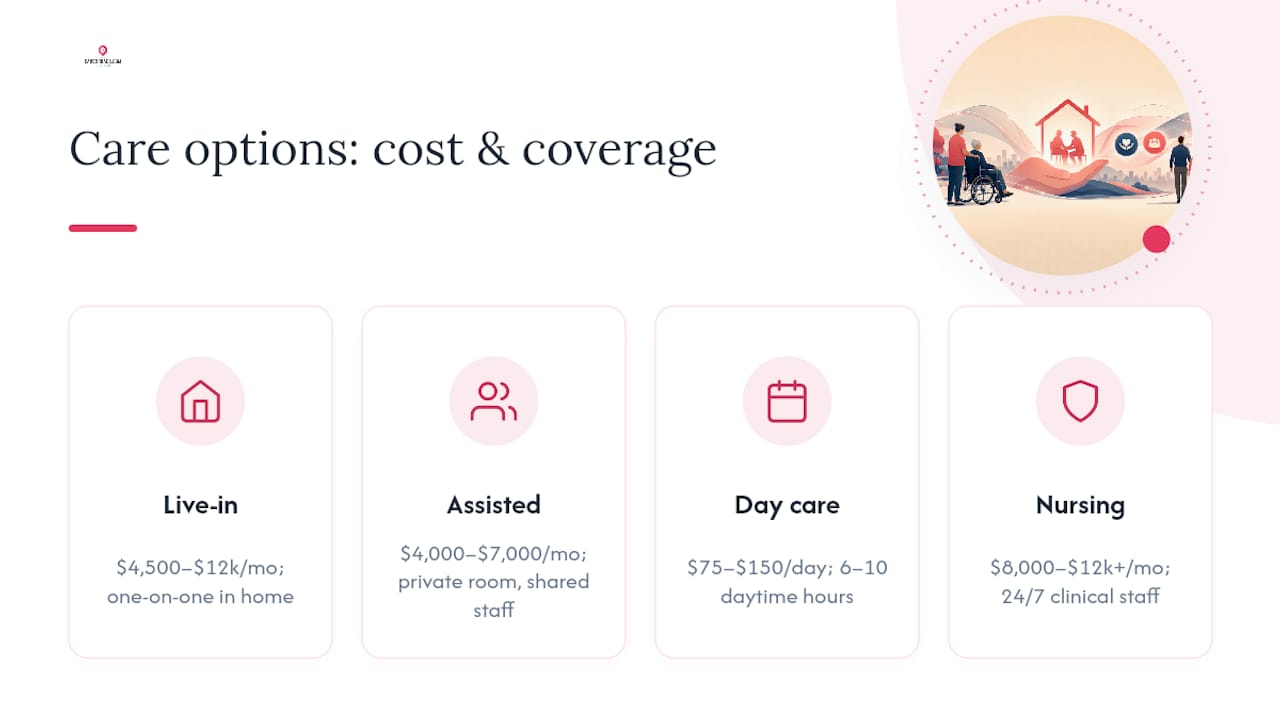
Adult day care programs run far cheaper, often $75 to $150 a day, but only cover daytime hours, usually 6 to 10 hours, meaning families still need evening and overnight coverage. This model works well for families where a spouse or adult child can handle care outside business hours.
Nursing homes and memory care facilities, appropriate for higher acuity or advanced dementia, often exceed the cost of live-in care, running $8,000 to $12,000 or more monthly, but include 24/7 clinical staff that a single live-in caregiver cannot match. For a side-by-side look at how live-in care stacks up against facility-based options in a specific market, the comparison of live-in care and assisted living in Greater Boston walks through real cost tradeoffs families face when weighing both paths.
Balancing Safety, Independence, and Budget
The right choice rarely comes down to the cheapest quote. It comes down to matching care intensity to actual daily needs, then pricing that honestly against both agency and private options. Document exactly what your loved one needs, hour by hour, before you call anyone. Get at least two competing quotes, and never skip a written agreement with a clear backup plan. Paying more for agency reliability is often worth it when the alternative is no coverage on the day you need it most.
— Care
Ready to Compare Verified Live-In Care Providers?
Once you know your budget range, the next hurdle is finding a provider you can actually trust with a parent's daily care, and that's where most families lose weeks scrolling through directories with no real feedback attached. This is addressed by providing a searchable provider directory with verified reviews from families who've hired these caregivers and agencies before you.
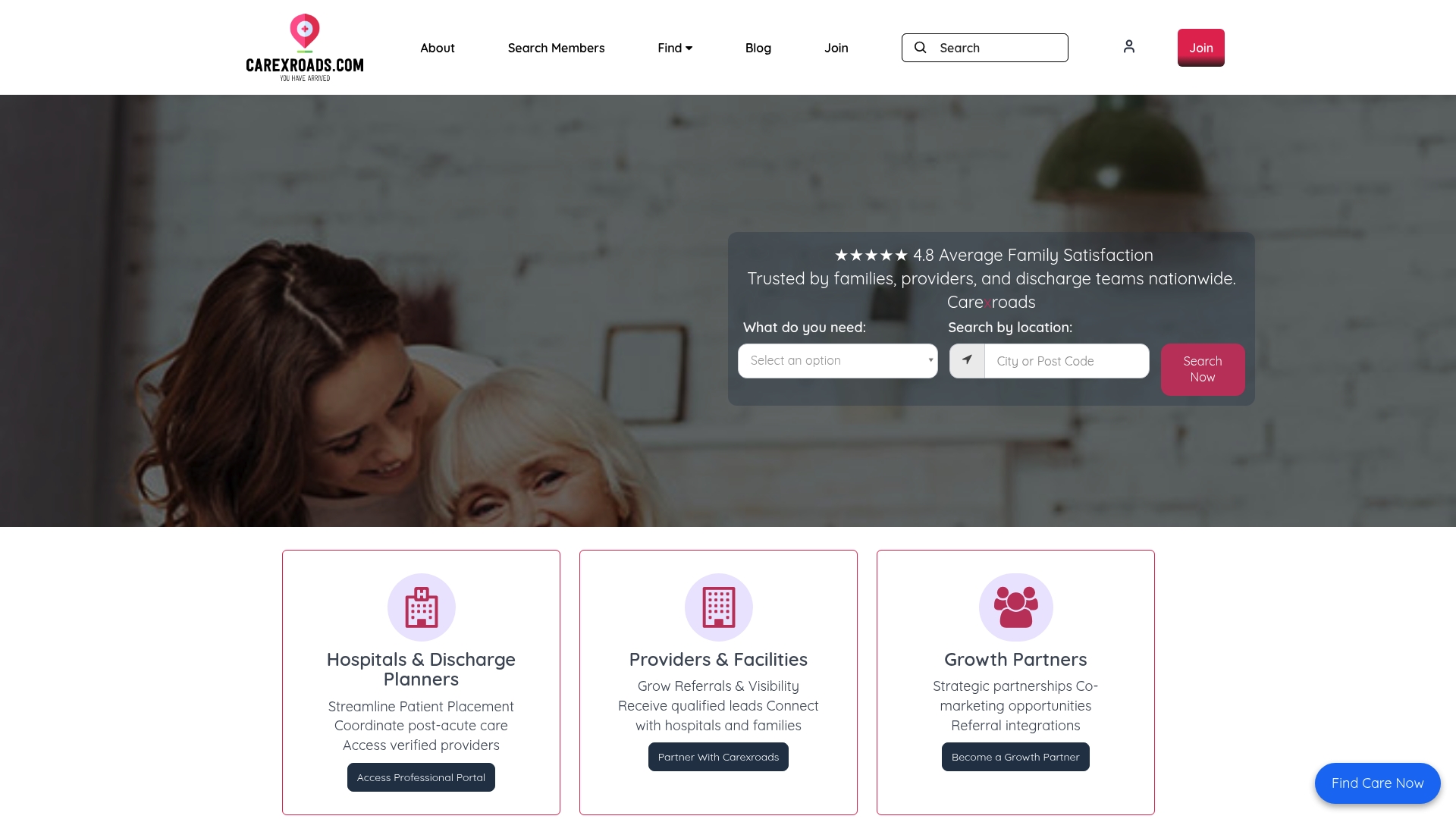
Users can filter by location, care type, and specialty, whether seeking a companion caregiver, a dementia-trained aide, or a licensed nurse for live-in support. Listings include real family feedback, not marketing copy, enabling comparison of providers based on actual experiences. If you're still weighing whether home care is the right fit at all, this discussion on how home care supports independence is a solid starting point. When you're ready to see options near you, start exploring providers on Carexroads and get a clearer picture of what's actually available in your area.
This article is general information, not a substitute for advice from a qualified financial advisor. Consult a qualified financial professional about your own circumstances before acting on anything here.
Sources
- U.S. Census Bureau — By 2030, All Baby Boomers Will Be Age 65 or Older
- ACL — How much care will you need?
- Medicare — Home health services coverage
- Medicaid — Home & community-based services
- U.S. Department of Veterans Affairs — Aid and Attendance and Housebound Allowances
- IRS Publication 502 — Medical and Dental Expenses